
Loading...

Loading page description...

Home / Page

How to Generate Leads Using Facebook Ads: A Complete Guide for Business Growth

Introduction

In today's competitive digital marketplace, generating a steady flow of qualified leads is essential for business growth. While there are many marketing channels available, Facebook Ads remains one of the most effective platforms for reaching potential customers, building brand awareness, and generating high-quality leads.

With billions of active users worldwide, Facebook provides businesses with powerful targeting capabilities that allow advertisers to reach specific audiences based on demographics, interests, behaviors, locations, and purchasing patterns. This level of precision makes Facebook Ads an invaluable tool for businesses seeking measurable marketing results.

However, many businesses struggle to achieve success because they launch campaigns without a clear strategy. Effective lead generation requires more than simply creating an advertisement and hoping for results. It involves careful planning, audience research, compelling ad creatives, optimized landing pages, and continuous performance monitoring.

This guide explains how businesses can use Facebook Ads strategically to generate qualified leads and improve marketing return on investment.


Why Facebook Ads Are Effective for Lead Generation

Facebook Ads offer several advantages that make them ideal for lead generation campaigns.

Benefits include:

  • Advanced audience targeting
  • Cost-effective advertising
  • Large user base
  • Detailed performance tracking
  • Lead collection automation
  • Retargeting opportunities
  • Multiple ad formats
  • Scalability for businesses of all sizes

Unlike traditional advertising, Facebook Ads allow businesses to target individuals who are most likely to be interested in their products or services, reducing wasted marketing spend.


Step 1: Define Your Lead Generation Goals

Before launching any Facebook advertising campaign, businesses must define clear objectives.

Common lead generation goals include:

Service Inquiries

Generating inquiries for consulting, legal, financial, or professional services.

Product Demonstrations

Encouraging prospects to request product demos.

Newsletter Sign-Ups

Building an email marketing list.

Appointment Bookings

Driving consultations or meetings.

Quote Requests

Generating requests for pricing information.

Your goals should be measurable and aligned with your overall business objectives.

For example:

  • Generate 100 qualified leads within 30 days.
  • Reduce cost per lead by 20% over three months.
  • Increase consultation bookings by 30%.

Clearly defined goals provide direction and improve campaign effectiveness.


Step 2: Identify Your Target Audience

One of Facebook's greatest strengths is its targeting capability.

The success of your campaign depends heavily on reaching the right audience.

Consider factors such as:

  • Age
  • Gender
  • Location
  • Occupation
  • Income level
  • Interests
  • Online behavior
  • Purchase history

For example, a business consulting firm may target:

  • Entrepreneurs
  • Startup founders
  • Small business owners
  • Corporate executives

Creating detailed customer personas helps improve targeting accuracy and campaign performance.


Step 3: Choose the Right Campaign Objective

Facebook offers several campaign objectives, but for lead generation, businesses should focus on:

Lead Generation Campaigns

These use Facebook Lead Forms, allowing users to submit information without leaving Facebook.

Conversion Campaigns

Designed to drive actions on your website, such as form submissions or bookings.

Traffic Campaigns

Used to direct users to a landing page where they can become leads.

Selecting the appropriate objective ensures Facebook's algorithm optimizes delivery toward users most likely to complete your desired action.


Step 4: Create an Irresistible Offer

People rarely provide their contact information without receiving something valuable in return.

Effective lead magnets include:

  • Free consultations
  • Business audits
  • E-books
  • Industry reports
  • Checklists
  • Templates
  • Webinars
  • Discount offers

For example:

"Get a Free Business Growth Assessment Worth $250."

A compelling offer significantly increases conversion rates.

The stronger the perceived value, the more likely users are to submit their information.


Step 5: Design High-Converting Facebook Ads

Your advertisement is often the first interaction prospects have with your business.

Effective ads should include:

Attention-Grabbing Visuals

Use professional images or videos that capture attention.

Clear Headlines

Examples:

  • Generate More Sales in 2026
  • Free Business Growth Consultation
  • Discover Hidden Growth Opportunities

Benefit-Focused Copy

Explain how your offer solves a specific problem.

Strong Call-to-Action

Examples:

  • Learn More
  • Book Now
  • Get Started
  • Claim Your Free Consultation

Avoid overly promotional language and focus on delivering value.


Step 6: Optimize Your Landing Page

If your campaign directs users to a website, the landing page plays a critical role in conversions.

An effective landing page should include:

Clear Headline

Explain the offer immediately.

Concise Copy

Focus on benefits rather than features.

Simple Form

Request only essential information.

Social Proof

Include testimonials, reviews, or case studies.

Strong Call-to-Action

Make it obvious what users should do next.

The landing page should align closely with the advertisement to maintain consistency and improve conversion rates.


Step 7: Use Facebook Lead Forms Effectively

Facebook Lead Forms simplify the lead generation process by allowing users to submit their information directly within Facebook.

Best practices include:

  • Keep forms short
  • Ask only necessary questions
  • Provide a clear privacy statement
  • Use custom thank-you screens
  • Include follow-up instructions

Reducing friction increases the likelihood of form completion.


Step 8: Implement Retargeting Campaigns

Most users do not convert on their first interaction.

Retargeting allows businesses to reconnect with:

  • Website visitors
  • Video viewers
  • Previous leads
  • Page followers
  • Cart abandoners

Retargeting campaigns often produce higher conversion rates because the audience is already familiar with your brand.

These campaigns can significantly improve overall advertising performance.


Step 9: Monitor Performance and Optimize

Successful Facebook advertising requires ongoing analysis.

Key metrics include:

Cost Per Lead (CPL)

Measures how much each lead costs.

Click-Through Rate (CTR)

Shows how many users click your advertisement.

Conversion Rate

Measures the percentage of users who become leads.

Lead Quality

Evaluates whether generated leads are likely to become customers.

Return on Ad Spend (ROAS)

Measures revenue generated relative to advertising costs.

Regular optimization helps improve campaign efficiency and profitability.


Common Facebook Lead Generation Mistakes

Many businesses fail to achieve results because they:

  • Target overly broad audiences
  • Use weak offers
  • Create poor-quality ads
  • Ignore landing page optimization
  • Fail to follow up with leads
  • Neglect campaign testing

Avoiding these mistakes can significantly improve performance.


The Importance of Lead Nurturing

Generating leads is only the first step.

Businesses should implement follow-up processes such as:

  • Email sequences
  • Phone calls
  • SMS campaigns
  • Consultation scheduling
  • Personalized offers

Timely follow-up improves conversion rates and increases revenue opportunities.


Conclusion

Facebook Ads remains one of the most powerful lead generation platforms available to businesses today. Its advanced targeting capabilities, flexible ad formats, and detailed analytics provide organizations with an effective way to attract qualified prospects and grow their customer base.

By defining clear objectives, understanding your audience, creating compelling offers, designing high-converting ads, optimizing landing pages, and continuously monitoring performance, businesses can generate a consistent stream of valuable leads.

When implemented strategically, Facebook Ads can become a predictable and scalable source of business growth, helping organizations achieve their marketing and sales goals more efficiently.

FAQ Section

What are Facebook Lead Ads?

Facebook Lead Ads are advertisements designed to collect customer information directly within Facebook using built-in lead forms.

How much should I spend on Facebook Ads for lead generation?

The ideal budget depends on your industry, competition, and goals. Many SMEs begin with a modest daily budget and increase spending based on performance.

Are Facebook Ads effective for small businesses?

Yes. Facebook Ads allow small businesses to target specific audiences and generate qualified leads without requiring large advertising budgets.

What is a good cost per lead?

A good cost per lead varies by industry, target audience, and customer lifetime value. Businesses should focus on lead quality as well as cost.

Why is audience targeting important?

Targeting ensures advertisements are shown to people most likely to be interested in your products or services, improving campaign efficiency.

Should I use Facebook Lead Forms or landing pages?

Both can be effective. Lead Forms reduce friction and often generate more leads, while landing pages provide greater control over the user experience.

How can I improve Facebook Ad conversion rates?

Improve targeting, strengthen your offer, use compelling visuals, simplify forms, optimize landing pages, and continuously test different ad variations.


Complete Social Media Marketing Strategy for SMEs: A Step-by-Step Guide to Business Growth

Introduction

In today's digital economy, social media has become one of the most powerful tools available to small and medium-sized enterprises (SMEs). With billions of active users across platforms such as Facebook, Instagram, LinkedIn, TikTok, and X (formerly Twitter), businesses now have unprecedented opportunities to connect with customers, build brand awareness, generate leads, and increase sales.

However, simply creating social media accounts is not enough. Many SMEs struggle because they post inconsistently, target the wrong audience, or fail to measure results. A well-structured social media marketing strategy helps businesses maximize their efforts and achieve measurable growth.

This guide provides a complete social media marketing strategy that SMEs can use to strengthen their online presence and drive business success.


Why Social Media Marketing Matters for SMEs

Social media is no longer optional for businesses. Customers increasingly rely on social platforms to discover brands, read reviews, compare services, and make purchasing decisions.

Benefits of social media marketing include:

  • Increased brand visibility
  • Improved customer engagement
  • Cost-effective advertising
  • Higher website traffic
  • Lead generation opportunities
  • Enhanced customer trust
  • Improved customer support
  • Better market insights

For SMEs with limited marketing budgets, social media provides an affordable way to compete with larger organizations.


Step 1: Define Clear Business Goals

Before posting content, define what you want to achieve through social media.

Common goals include:

Brand Awareness

Increase the number of people who know about your business.

Lead Generation

Collect inquiries from potential customers.

Website Traffic

Drive visitors to your website or landing pages.

Sales Growth

Convert social media followers into paying customers.

Customer Retention

Maintain relationships with existing customers.

Your goals should be SMART:

  • Specific
  • Measurable
  • Achievable
  • Relevant
  • Time-bound

For example:

"Increase website traffic from social media by 30% within six months."


Step 2: Identify Your Target Audience

One of the biggest mistakes SMEs make is trying to market to everyone.

Instead, identify your ideal customer profile.

Consider:

  • Age
  • Gender
  • Occupation
  • Income level
  • Geographic location
  • Interests
  • Online behavior
  • Purchasing habits

For example, a business consulting firm may target:

  • Startup founders
  • SME owners
  • Corporate managers
  • Entrepreneurs seeking growth strategies

Understanding your audience helps you create content that addresses their specific needs and challenges.


Step 3: Select the Right Social Media Platforms

Not every platform is suitable for every business.

Facebook

Best for:

  • Community building
  • Local business marketing
  • Paid advertising

Instagram

Best for:

  • Visual branding
  • Product showcases
  • Customer engagement

LinkedIn

Best for:

  • B2B marketing
  • Professional services
  • Business networking

TikTok

Best for:

  • Brand awareness
  • Younger audiences
  • Creative content

YouTube

Best for:

  • Educational content
  • Tutorials
  • Thought leadership

SMEs should focus on the platforms where their target audience is most active rather than trying to dominate every platform.


Step 4: Create a Content Strategy

Content is the foundation of successful social media marketing.

A balanced content strategy should include:

Educational Content

Teach your audience something valuable.

Examples:

  • Industry tips
  • How-to guides
  • Expert insights
  • Case studies

Promotional Content

Showcase your products or services.

Examples:

  • Service highlights
  • Product launches
  • Customer testimonials

Engagement Content

Encourage audience interaction.

Examples:

  • Polls
  • Questions
  • Surveys
  • Contests

Inspirational Content

Build emotional connections.

Examples:

  • Success stories
  • Motivational quotes
  • Company achievements

A commonly recommended approach is the 80/20 rule:

  • 80% valuable and educational content
  • 20% promotional content

This helps maintain audience trust while still supporting business objectives.


Step 5: Develop a Content Calendar

Consistency is critical in social media marketing.

Create a monthly content calendar that outlines:

  • Posting dates
  • Content topics
  • Platform distribution
  • Campaign schedules
  • Promotional events

A content calendar helps businesses remain organized and maintain a consistent posting schedule.

Example:

Monday โ€“ Educational post

Wednesday โ€“ Industry insight

Friday โ€“ Customer success story

Sunday โ€“ Promotional offer

Consistency helps improve audience engagement and algorithm visibility.


Step 6: Leverage Social Media Advertising

Organic reach can be limited, especially for newer businesses.

Paid advertising can significantly accelerate growth.

Popular advertising options include:

  • Facebook Ads
  • Instagram Ads
  • LinkedIn Ads
  • TikTok Ads
  • YouTube Ads

Effective ad campaigns should include:

  • Clear audience targeting
  • Compelling visuals
  • Strong headlines
  • Clear calls-to-action
  • Optimized landing pages

Even modest advertising budgets can generate meaningful results when campaigns are properly managed.


Step 7: Engage With Your Audience

Social media is a two-way communication channel.

Businesses should actively:

  • Respond to comments
  • Answer messages
  • Address complaints
  • Thank customers
  • Participate in discussions

Prompt engagement improves customer satisfaction and strengthens brand loyalty.

Consumers are more likely to trust businesses that communicate openly and respond quickly.


Step 8: Measure Performance and ROI

Successful social media marketing requires continuous evaluation.

Key metrics to monitor include:

Reach

Number of people who see your content.

Engagement Rate

Likes, comments, shares, and interactions.

Website Traffic

Visitors generated from social media.

Lead Generation

Number of inquiries received.

Conversion Rate

Percentage of visitors who become customers.

Return on Investment (ROI)

Revenue generated compared to marketing costs.

Analyzing these metrics helps businesses identify successful strategies and improve future campaigns.


Common Social Media Marketing Mistakes SMEs Should Avoid

Many businesses fail to achieve results because they:

  • Post inconsistently
  • Ignore analytics
  • Focus only on selling
  • Use poor-quality visuals
  • Target the wrong audience
  • Neglect customer engagement
  • Copy competitors without a strategy

Avoiding these mistakes can dramatically improve performance.


The Future of Social Media Marketing

As technology evolves, SMEs must stay ahead of emerging trends.

Key trends shaping the future include:

  • Artificial Intelligence-powered marketing
  • Personalized customer experiences
  • Short-form video content
  • Social commerce
  • Influencer partnerships
  • Data-driven decision making

Businesses that adapt to these trends will be better positioned for long-term success.


Conclusion

A successful social media marketing strategy requires more than simply posting content online. SMEs must establish clear objectives, understand their audience, choose the right platforms, create valuable content, engage consistently, and measure performance regularly.

By implementing the strategies outlined in this guide, businesses can build stronger customer relationships, generate qualified leads, increase brand awareness, and achieve sustainable growth.

Social media is one of the most powerful business growth tools available today. The organizations that approach it strategically will be the ones that thrive in an increasingly digital marketplace.

How to Build a Business Growth Strategy for 2026: A Step-by-Step Guide for Sustainable Success

In today's highly competitive business environment, companies that fail to plan for growth often struggle to remain relevant. As we approach 2026, organizations must adapt to changing customer expectations, technological advancements, market disruptions, and evolving economic conditions. A well-defined business growth strategy serves as a roadmap that helps businesses identify opportunities, allocate resources effectively, and achieve long-term success.

Whether you are a startup founder, small business owner, or corporate executive, this guide will help you build a practical and effective business growth strategy for 2026.


Why Every Business Needs a Growth Strategy

Many businesses operate without a structured plan, relying on day-to-day decisions rather than long-term objectives. While this approach may work temporarily, it often leads to stagnation and missed opportunities.

A business growth strategy helps you:

  • Define clear business objectives
  • Identify new revenue opportunities
  • Improve operational efficiency
  • Gain competitive advantage
  • Increase customer acquisition and retention
  • Prepare for market changes and risks

Organizations with a documented growth strategy are generally better positioned to achieve sustainable growth and profitability.


Step 1: Evaluate Your Current Business Position

Before planning for future growth, you must understand where your business currently stands.

Conduct a comprehensive business assessment by analyzing:

Internal Factors

  • Financial performance
  • Team capabilities
  • Operational processes
  • Product or service quality
  • Customer satisfaction levels

External Factors

  • Market trends
  • Industry developments
  • Competitor activities
  • Economic conditions
  • Regulatory changes

A SWOT Analysis (Strengths, Weaknesses, Opportunities, and Threats) can provide valuable insights into your organization's current position.


Step 2: Define Clear Growth Objectives

One of the biggest mistakes businesses make is setting vague goals such as "increase sales" or "grow the business."

Instead, establish SMART goals:

  • Specific
  • Measurable
  • Achievable
  • Relevant
  • Time-bound

Examples include:

  • Increase annual revenue by 25% within 12 months.
  • Acquire 500 new customers by Q4 2026.
  • Launch two new service offerings before year-end.
  • Expand operations into three new markets.

Clear objectives provide direction and help measure progress effectively.


Step 3: Understand Your Target Market

Successful growth depends on understanding customer needs better than your competitors.

Conduct market research to answer important questions:

  • Who are your ideal customers?
  • What challenges do they face?
  • What solutions are they actively seeking?
  • How do they make purchasing decisions?

Use customer surveys, interviews, online analytics, and competitor research to gather valuable insights.

Businesses that continuously monitor customer behavior are better equipped to adapt and remain competitive.


Step 4: Identify Growth Opportunities

Growth opportunities can come from multiple sources.

Market Penetration

Increase sales within your existing market through improved marketing, customer retention, and pricing strategies.

Market Expansion

Enter new geographic regions or customer segments.

Product Development

Introduce new products or services that address customer needs.

Strategic Partnerships

Collaborate with complementary businesses to reach wider audiences.

Evaluating multiple growth options allows you to select the most profitable and sustainable opportunities.


Step 5: Invest in Digital Transformation

Digital technologies continue to reshape how businesses operate and compete.

For 2026, businesses should prioritize:

  • Website optimization
  • Search Engine Optimization (SEO)
  • Customer Relationship Management (CRM) systems
  • Marketing automation
  • Artificial Intelligence tools
  • Data analytics platforms

Organizations that embrace digital transformation often experience improved efficiency, better customer experiences, and stronger revenue growth.


Step 6: Develop a Marketing and Sales Strategy

A growth strategy is incomplete without a plan to attract and convert customers.

Effective marketing channels may include:

  • Content marketing
  • Search engine optimization
  • Social media marketing
  • Email marketing
  • Paid advertising
  • Referral programs

Your sales team should also have clear processes for lead generation, nurturing, and conversion.

Consistency between marketing and sales efforts significantly improves business performance.


Step 7: Track Key Performance Indicators (KPIs)

[IMAGE 5 HERE]

Monitoring performance is essential for achieving growth objectives.

Important KPIs include:

  • Revenue growth rate
  • Customer acquisition cost
  • Customer lifetime value
  • Conversion rate
  • Website traffic
  • Customer retention rate
  • Profit margin

Regularly reviewing these metrics enables businesses to make informed decisions and adjust strategies when necessary.


Common Growth Strategy Mistakes to Avoid

Many organizations fail to achieve growth because they:

  • Lack clear objectives
  • Ignore market research
  • Fail to monitor performance
  • Neglect customer feedback
  • Underinvest in digital technologies
  • Attempt to grow too quickly

Avoiding these mistakes can significantly improve your chances of success.


Conclusion

Building a successful business growth strategy for 2026 requires careful planning, market understanding, digital innovation, and continuous performance monitoring. Businesses that proactively prepare for future opportunities and challenges are more likely to achieve sustainable growth and long-term profitability.

By assessing your current position, defining measurable goals, understanding your customers, embracing digital transformation, and tracking key performance indicators, your organization can create a roadmap for success in 2026 and beyond.

Growth does not happen by chanceโ€”it happens through deliberate planning, execution, and continuous improvement.

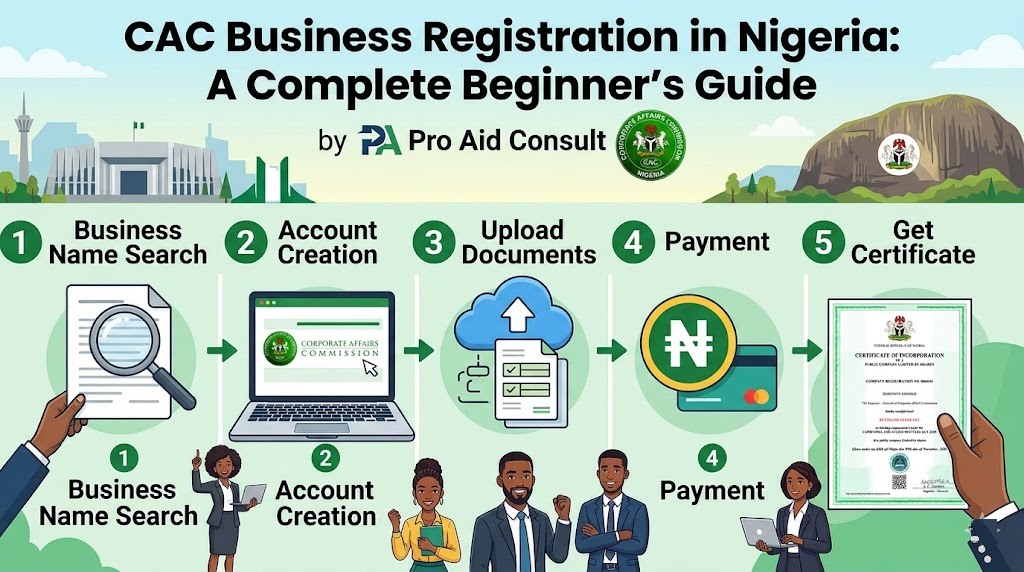
CAC Business Registration in Nigeria: A Complete Beginnerโ€™s Guide by Pro Aid Consult

Starting a business in Nigeria is an exciting journey, but many entrepreneurs make the mistake of operating without proper registration. While it may seem easier to begin trading immediately, registering your business with the Corporate Affairs Commission (CAC) is one of the most important steps toward building a legitimate, trustworthy, and sustainable enterprise.

Whether you are launching a small online store, consulting firm, fashion brand, logistics company, restaurant, or professional service business, CAC registration provides the legal foundation your business needs to grow.

Unfortunately, many first-time entrepreneurs are unsure about the registration process, requirements, costs, and benefits. This guide explains everything beginners need to know about CAC business registration in Nigeria and how Pro Aid Consult can help simplify the process.


What Is CAC Registration?

The Corporate Affairs Commission (CAC) is the government agency responsible for regulating and managing business registrations in Nigeria.

CAC registration officially recognizes your business as a legal entity and provides documentation that proves your business exists under Nigerian law.

Once registered, your business receives official records that can be used for banking, taxation, contracts, licensing, and other business activities.


Why Is CAC Registration Important?

Many business owners ask:

"Can I operate a business without CAC registration?"

Technically, some small informal businesses operate without registration. However, doing so can expose you to several limitations and risks.

Registering your business offers significant advantages, including:

Legal Recognition

CAC registration gives your business legal status, making it easier to enter contracts, secure partnerships, and conduct official transactions.

Customer Trust

Consumers are more likely to do business with registered companies because registration demonstrates professionalism and credibility.

Access to Business Banking

Most financial institutions require CAC registration documents before opening a corporate account.

Eligibility for Funding

Investors, grant providers, and lenders often request proof of business registration before approving financial support.

Regulatory Compliance

Registration helps businesses comply with government regulations and industry requirements.


Types of Business Registration Available in Nigeria

Before registering, it is important to choose the right business structure.

Business Name Registration

This is one of the most common options for small businesses and sole proprietors.

Suitable for:

  • Freelancers
  • Consultants
  • Online businesses
  • Retail shops
  • Service providers

Business name registration is generally simpler and more affordable than company incorporation.

Private Limited Company (Ltd)

A private limited company is a separate legal entity from its owners.

Suitable for:

  • Growing businesses
  • Startups seeking investors
  • Medium-sized enterprises
  • Professional service firms

This structure offers greater credibility and liability protection.

Incorporated Trustees

This registration type is commonly used for:

  • Non-governmental organizations (NGOs)
  • Religious organizations
  • Associations
  • Foundations

Each registration option serves different business objectives, making professional guidance valuable during the selection process.


Requirements for CAC Registration

The requirements may vary depending on the registration type, but generally include:

Proposed Business Name

You will need one or more preferred business names for availability checks and reservation.

Business Information

Details such as:

  • Business activities
  • Business address
  • Contact information

Owner Information

Information about the proprietor, directors, or shareholders may be required depending on the registration category.

Valid Identification

Examples include:

  • National ID Card
  • International Passport
  • Driver's License
  • Voter's Card

Providing accurate information helps prevent processing delays.


Step-by-Step CAC Registration Process

Understanding the registration process can help business owners prepare effectively.

Step 1: Business Name Search

The first step is verifying whether your preferred business name is available.

A unique and compliant name increases the likelihood of approval.

Step 2: Name Reservation

Once approved, the name is reserved to prevent other applicants from using it during the registration process.

Step 3: Documentation Submission

Required information and supporting documents are submitted for processing.

Step 4: Application Review

The CAC reviews the application to ensure compliance with registration requirements.

Step 5: Certificate Issuance

Upon successful approval, registration documents and certificates are issued.

These documents serve as official proof of registration.


Common Mistakes to Avoid During Registration

Many entrepreneurs experience delays because of avoidable errors.

Choosing Restricted Names

Certain words and business names may require additional approvals.

Providing Incorrect Information

Inaccurate details can lead to rejection or future compliance issues.

Selecting the Wrong Business Structure

Choosing an unsuitable registration category may create operational limitations later.

Using Unqualified Agents

Working with inexperienced individuals can result in documentation errors and unnecessary delays.

Professional registration support helps reduce these risks.


How CAC Registration Supports Business Growth

Business registration is not merely a legal requirementโ€”it is a growth strategy.

Registered businesses often enjoy:

Better Business Opportunities

Many organizations prefer dealing with registered businesses when awarding contracts.

Increased Investor Confidence

Investors typically view registered entities as more structured and reliable.

Improved Brand Image

Registration enhances professionalism and strengthens market credibility.

Easier Tax Compliance

Registered businesses can obtain Tax Identification Numbers (TINs) and comply with tax regulations more effectively.

Expansion Potential

Businesses planning to scale operations often require proper registration as part of their growth strategy.


Risks of Operating Without CAC Registration

Many entrepreneurs underestimate the consequences of operating informally.

Businesses without registration may encounter:

  • Difficulty opening corporate bank accounts
  • Reduced customer trust
  • Limited access to financing
  • Challenges securing contracts
  • Regulatory complications

For a more detailed explanation, read our article:

5 Risks of Operating a Business Without CAC Registration

Understanding these risks can help business owners make informed decisions about formalizing their operations.


Why Choose Pro Aid Consult for CAC Registration?

At Pro Aid Consult, we understand that many entrepreneurs are focused on building and growing their businesses rather than navigating administrative procedures.

Our registration services are designed to make the process simple, efficient, and stress-free.

Our Services Include:

  • Business name registration
  • Company incorporation
  • NGO registration
  • Name availability checks
  • Documentation support
  • Compliance guidance
  • Post-registration advisory services

Our experienced team helps clients avoid costly mistakes while ensuring their registrations are completed accurately.


Frequently Asked Questions

How Long Does CAC Registration Take?

Processing times may vary depending on the registration type and application requirements.

Can I Register an Online Business?

Yes. Online businesses can and should be registered to improve credibility and legal protection.

Do I Need CAC Registration Before Opening a Business Bank Account?

In most cases, yes. Banks generally require registration documents before opening a corporate account.

Can I Change My Business Structure Later?

Yes, but restructuring may involve additional procedures and regulatory requirements.


Conclusion

CAC registration is one of the most important investments a business owner can make. It provides legal recognition, enhances credibility, supports compliance, and opens doors to funding, partnerships, and growth opportunities.

Whether you are starting a small business, launching a startup, or expanding an existing enterprise, proper registration creates a strong foundation for long-term success.

At Pro Aid Consult, we help entrepreneurs and organizations complete their CAC registration quickly, accurately, and professionally. Our goal is to simplify the process so you can focus on building a successful business with confidence.

If you are ready to register your business in Nigeria, Pro Aid Consult is here to guide you every step of the way.

How Pro Aid Consult Helps Businesses Build Scalable Growth Structures

Many businesses start with a great idea, a strong product, or a passionate founder. However, as the business grows, managing operations, customers, employees, finances, and compliance becomes increasingly complex. Without a scalable growth structure, even profitable businesses can struggle with inefficiencies, inconsistent revenue, and operational bottlenecks.

This is where Pro Aid Consult steps in. As a trusted business development and consulting firm, Pro Aid Consult helps businesses create sustainable systems, strategic frameworks, and growth-focused processes that enable long-term success.

In this article, we'll explore what scalable growth structures are, why they matter, and how Pro Aid Consult helps businesses establish a solid foundation for expansion.


What Is a Scalable Growth Structure?

A scalable growth structure refers to the systems, processes, strategies, and operational frameworks that allow a business to grow without experiencing significant disruptions or increased inefficiencies.

Simply put, scalability means your business can handle increased demand, customers, revenue, and operations without proportionally increasing costs or complexity.

Businesses with scalable structures typically have:

  • Clear organizational systems
  • Defined operational processes
  • Effective marketing strategies
  • Strong financial management
  • Compliance and legal frameworks
  • Technology-driven workflows
  • Measurable business goals

Without these elements, growth can become difficult to manage and may even lead to declining performance.


Why Many Businesses Struggle to Scale

Many entrepreneurs focus heavily on sales and customer acquisition while neglecting the systems needed to support growth.

Common challenges include:

1. Lack of Strategic Planning

Many businesses operate without a documented growth strategy, making decision-making reactive rather than proactive.

2. Inefficient Processes

Manual processes often consume valuable time and increase the likelihood of errors.

3. Poor Financial Management

Without proper budgeting, forecasting, and financial oversight, businesses may struggle to sustain growth.

4. Weak Brand Positioning

A business may offer excellent products or services but fail to communicate its value effectively to the target audience.

5. Compliance Challenges

Regulatory requirements, tax obligations, and business registrations can become significant obstacles if not managed properly.


How Pro Aid Consult Builds Scalable Growth Structures

At Pro Aid Consult, scalability is approached through a combination of strategic planning, operational improvement, compliance support, and digital transformation.

Business Development Strategy

Growth starts with a clear roadmap.

Pro Aid Consult works closely with business owners to evaluate their current operations, identify growth opportunities, and develop customized strategies aligned with their goals.

This includes:

  • Business assessments
  • Market opportunity analysis
  • Revenue growth planning
  • Competitive positioning
  • Expansion strategies

By creating a structured growth plan, businesses gain clarity on where they are and how to reach their desired destination.


Process Optimization and Operational Efficiency

As businesses grow, inefficient systems can create bottlenecks that limit performance.

Pro Aid Consult helps organizations streamline operations by:

  • Documenting workflows
  • Improving team productivity
  • Automating repetitive tasks
  • Creating standard operating procedures (SOPs)
  • Implementing performance tracking systems

These improvements allow businesses to serve more customers without sacrificing quality.


Digital Growth and Online Brand Development

Modern businesses require a strong digital presence to remain competitive.

Pro Aid Consult provides support in:

  • Website development
  • Search Engine Optimization (SEO)
  • Social media management
  • Digital marketing campaigns
  • Online brand positioning

A well-optimized digital presence helps businesses attract qualified leads, increase visibility, and generate sustainable growth opportunities.

For additional growth-focused insights, businesses can also explore our guide on 10 Business Growth Strategies Nigerian SMEs Can Use in 2026

This resource provides practical strategies that complement a scalable growth framework.


Market Research and Business Intelligence

Successful businesses make decisions based on data rather than assumptions.

Pro Aid Consult conducts detailed market research to help businesses understand:

  • Customer behavior
  • Industry trends
  • Market demand
  • Competitor activities
  • Growth opportunities

These insights enable business owners to make informed decisions and reduce risks associated with expansion.


Compliance and Regulatory Support

Compliance is often overlooked until it becomes a problem.

Pro Aid Consult assists businesses with:

  • Business registrations
  • Corporate compliance
  • Tax consultation
  • Regulatory documentation
  • Audit preparation

By maintaining compliance, businesses reduce legal risks and create a more stable environment for growth.


Financial Structure and Growth Planning

Growth requires more than increasing revenue. Businesses must also manage resources effectively.

Pro Aid Consult supports organizations through:

  • Financial planning
  • Budget development
  • Cash flow management
  • Business forecasting
  • Investment readiness support

These services help businesses make strategic financial decisions while preparing for future expansion.


Benefits of Building a Scalable Business Structure

Businesses that invest in scalable systems often experience several advantages:

Increased Productivity

Efficient systems allow teams to focus on high-value activities rather than repetitive tasks.

Improved Customer Experience

Structured operations ensure consistent service delivery and customer satisfaction.

Better Decision-Making

Access to accurate data and performance metrics supports smarter business decisions.

Sustainable Revenue Growth

Businesses can manage increasing demand without overwhelming existing resources.

Reduced Operational Risks

Documented processes and compliance frameworks help minimize costly mistakes.


Who Can Benefit from Pro Aid Consult's Services?

Pro Aid Consult works with a wide range of businesses, including:

  • Startups
  • Small and Medium-Sized Enterprises (SMEs)
  • Growing service businesses
  • E-commerce brands
  • Professional service providers
  • Corporate organizations

Whether a business is just starting or preparing for expansion, scalable growth structures can significantly improve long-term success.


Frequently Asked Questions

What does business scalability mean?

Business scalability refers to the ability of a company to increase revenue, customers, and operations without experiencing significant increases in operational costs or inefficiencies.

Why is scalability important?

Scalability helps businesses maintain profitability, improve efficiency, and support sustainable long-term growth.

How can Pro Aid Consult help my business grow?

Pro Aid Consult provides strategic planning, market research, digital marketing, compliance support, business development consulting, and operational optimization services designed to support sustainable growth.

Do small businesses need growth structures?

Yes. Even small businesses benefit from having systems, processes, and strategic plans that prepare them for future growth.


Conclusion

Growth is not simply about increasing sales; it's about building a business that can sustain and manage that growth effectively. Without the right systems, strategies, and operational structures, expansion can create challenges that limit long-term success.

Pro Aid Consult helps businesses develop scalable growth structures that support efficiency, compliance, profitability, and sustainable expansion. By combining strategic planning, digital growth solutions, market intelligence, and business development expertise, Pro Aid Consult empowers organizations to build stronger foundations for the future.

Businesses that invest in scalability today are better positioned to compete, adapt, and thrive in an increasingly competitive marketplace.

Common Financial Management Errors Businesses Should Avoid

Introduction

Financial management is one of the most important aspects of running a successful business. Regardless of whether you operate a startup, small business, or growing enterprise, your ability to manage finances effectively can determine your long-term success or failure.

Many businesses focus heavily on increasing sales and attracting customers but overlook financial management practices that keep the business healthy and sustainable. Poor financial decisions can lead to cash flow problems, compliance issues, mounting debts, and even business closure.

The good news is that many financial management mistakes are preventable. By understanding common errors and implementing the right systems, business owners can improve profitability, maintain financial stability, and position their businesses for growth.

In this article, Pro Aid Consult highlights the most common financial management errors businesses should avoid and provides practical solutions to help entrepreneurs make smarter financial decisions.


Why Financial Management Matters

Effective financial management allows business owners to:

  • Monitor business performance
  • Manage cash flow efficiently
  • Meet tax and regulatory obligations
  • Plan for growth and expansion
  • Make informed business decisions
  • Reduce financial risks

Businesses with strong financial management systems are more likely to survive economic challenges and achieve sustainable growth.


1. Mixing Personal and Business Finances

One of the most common mistakes among small business owners is using the same account for personal and business transactions.

When personal and business expenses are combined, it becomes difficult to:

  • Track profitability
  • Prepare financial statements
  • Calculate taxes accurately
  • Monitor cash flow

How to Avoid This Mistake

Open a dedicated business bank account and ensure all business transactions are conducted separately from personal spending.

Maintaining separate accounts improves transparency and simplifies bookkeeping.


2. Poor Record Keeping

Many businesses fail to maintain accurate and organized financial records.

Missing invoices, incomplete expense records, and poor bookkeeping practices can create serious problems when preparing financial reports or responding to tax authorities.

Common Record-Keeping Issues

  • Lost receipts
  • Unrecorded sales
  • Missing supplier invoices
  • Inaccurate expense tracking

Solution

Implement a reliable bookkeeping system and update records regularly. Digital accounting software can help automate record keeping and improve accuracy.


3. Ignoring Cash Flow Management

A profitable business can still fail if it runs out of cash.

Cash flow refers to the movement of money into and out of a business. Many companies focus solely on revenue while ignoring actual cash availability.

Warning Signs of Cash Flow Problems

  • Difficulty paying suppliers
  • Delayed employee salaries
  • Frequent borrowing
  • Overdue bills

Solution

Prepare monthly cash flow forecasts and monitor cash movements closely. Understanding future cash requirements helps prevent financial emergencies.


4. Failing to Budget Properly

Operating without a budget is like driving without a roadmap.

Without proper budgeting, businesses often overspend, underestimate expenses, and struggle to allocate resources effectively.

Benefits of Budgeting

  • Better financial control
  • Improved spending decisions
  • Easier growth planning
  • Enhanced profitability

Solution

Create an annual budget and review it regularly. Compare actual performance against budget projections to identify areas requiring adjustment.


5. Neglecting Tax Obligations

Many business owners underestimate the importance of tax compliance.

Failure to comply with tax requirements can lead to penalties, interest charges, audits, and legal complications.

Business owners should understand their obligations regarding:

  • Company Income Tax
  • Value Added Tax (VAT)
  • Pay-As-You-Earn (PAYE)
  • Withholding Tax

For a detailed guide on tax compliance requirements, read our article on Basic Tax Obligations Every Nigerian Business Owner Should Understand

Understanding your tax responsibilities helps protect your business from unnecessary financial and regulatory risks.


6. Not Monitoring Business Performance

Some business owners only review financial reports when problems arise.

This reactive approach often causes important warning signs to be overlooked.

Key Financial Metrics Every Business Should Monitor

  • Revenue growth
  • Profit margins
  • Operating expenses
  • Cash flow position
  • Outstanding debts
  • Customer payment trends

Solution

Review financial reports monthly and use the information to make strategic decisions.

Regular performance monitoring helps identify challenges before they become major problems.


7. Overreliance on Debt Financing

Loans can support business growth, but excessive borrowing can create financial pressure.

Many businesses take on debt without evaluating repayment capacity or long-term financial implications.

Risks of Excessive Debt

  • Increased financial stress
  • Reduced profitability
  • Cash flow constraints
  • Difficulty securing future financing

Solution

Borrow only when necessary and ensure loan repayments fit comfortably within your financial projections.


8. Lack of Financial Controls

Weak internal controls can expose businesses to fraud, theft, and financial mismanagement.

Without proper oversight, unauthorized transactions and accounting errors may go undetected.

Examples of Effective Financial Controls

  • Approval procedures for expenditures
  • Regular bank reconciliations
  • Segregation of financial duties
  • Routine financial reviews

Solution

Establish clear financial procedures and regularly evaluate compliance within the organization.


9. Delaying Professional Financial Advice

Many business owners wait until financial problems become severe before seeking expert assistance.

Professional guidance can help businesses avoid costly mistakes and identify opportunities for improvement.

When to Seek Professional Support

  • During rapid business growth
  • Before applying for loans
  • When preparing tax filings
  • During financial restructuring
  • Before major investments

Working with experienced financial consultants can provide valuable insights and improve business performance.


10. Ignoring Business Audits

Some businesses view audits as unnecessary expenses rather than valuable management tools.

However, audits can reveal hidden risks, improve financial accuracy, and strengthen internal controls.

Benefits of Regular Audits

  • Improved financial transparency
  • Increased investor confidence
  • Better compliance
  • Reduced financial risks
  • Stronger business credibility

Professional audit services help ensure financial records accurately reflect business performance.


Frequently Asked Questions

What Is the Most Common Financial Management Mistake?

Poor cash flow management is one of the most common reasons businesses experience financial difficulties, even when sales are strong.

How Often Should Financial Records Be Reviewed?

Financial reports should ideally be reviewed monthly to monitor performance and identify potential issues early.

Can Professional Consultants Help Improve Financial Management?

Yes. Financial consultants provide expert guidance on budgeting, compliance, audits, tax planning, and overall financial strategy.

Why Is Tax Compliance Important?

Tax compliance helps businesses avoid penalties, maintain credibility, and meet legal requirements.


Conclusion

Financial management plays a critical role in business success. While many entrepreneurs focus on increasing revenue, long-term growth depends on how effectively finances are managed behind the scenes.

Avoiding common mistakes such as poor record keeping, weak cash flow management, inadequate budgeting, tax non-compliance, and lack of financial oversight can significantly improve business performance.

At Pro Aid Consult, we help businesses strengthen their financial systems through professional consulting, audit services, tax advisory, compliance support, and business development solutions.

By implementing sound financial management practices today, your business can build a stronger foundation for sustainable growth and future success.

Professional Audit Services by Pro Aid Consult for SMEs in Nigeria

Why Every Growing Business Needs Professional Audit Services

As businesses grow, financial management becomes more complex. Many Small and Medium Enterprises (SMEs) in Nigeria focus on increasing sales, attracting customers, and expanding operations, but often overlook one critical aspect of business successโ€”financial transparency and accountability.

This is where professional audit services become essential.

An audit is more than just a regulatory requirement. It is a valuable business tool that helps owners understand their financial position, identify risks, improve internal controls, and build trust with investors, banks, customers, and government agencies.

At Pro Aid Consult, we provide comprehensive audit services designed specifically for Nigerian SMEs. Our goal is to help business owners maintain accurate financial records, comply with regulatory requirements, and make informed business decisions based on reliable financial information.

In this article, we explain the importance of professional audit services, common challenges SMEs face, and how Pro Aid Consult helps businesses achieve financial clarity and long-term success.


What Is a Business Audit?

A business audit is an independent examination of a company's financial records, accounting systems, transactions, and internal controls.

The purpose of an audit is to verify that financial statements accurately reflect the company's financial performance and position.

An audit helps answer important questions such as:

  • Are the financial records accurate?
  • Is the business complying with relevant regulations?
  • Are there financial risks that need attention?
  • Are company funds being properly managed?
  • Can stakeholders trust the financial reports?

For SMEs, regular audits provide confidence that the business is operating on a solid financial foundation.


Why Audit Services Are Important for Nigerian SMEs

Many business owners assume audits are only necessary for large corporations. However, SMEs can benefit significantly from professional auditing services.

1. Improve Financial Accuracy

Poor bookkeeping and inaccurate financial records can lead to costly mistakes.

Professional audits help identify:

  • Accounting errors
  • Duplicate transactions
  • Missing records
  • Incorrect financial reporting

By correcting these issues early, businesses can make better financial decisions and avoid future complications.

2. Strengthen Business Credibility

Financial transparency builds trust.

Banks, investors, government agencies, and business partners often prefer working with organizations that maintain audited financial statements.

An independent audit demonstrates that your business takes financial accountability seriously.

3. Support Loan and Funding Applications

Many financial institutions require audited financial statements before approving business loans.

Whether you're applying for:

  • SME financing
  • Business expansion loans
  • Investor funding
  • Government grants

Audited accounts improve your credibility and increase the likelihood of approval.

4. Ensure Regulatory Compliance

Nigerian businesses must comply with various financial and tax regulations.

Professional audits help ensure compliance with:

  • Corporate Affairs Commission (CAC) requirements
  • Federal Inland Revenue Service (FIRS) obligations
  • State tax regulations
  • Industry-specific compliance standards

Failure to comply may result in penalties, fines, or legal complications.


Common Financial Challenges Faced by SMEs

Many SMEs struggle with financial management due to limited resources and lack of specialized expertise.

Some common challenges include:

Incomplete Financial Records

Many businesses fail to maintain organized accounting records, making it difficult to track income and expenses accurately.

Poor Internal Controls

Without proper financial controls, businesses become vulnerable to fraud, theft, and financial mismanagement.

Tax Compliance Issues

Incorrect tax calculations, late filings, and missing documentation can expose businesses to regulatory penalties.

Cash Flow Management Problems

Many SMEs generate revenue but struggle with cash flow because financial information is not accurately monitored.

Professional audits help identify these issues and provide recommendations for improvement.


How Pro Aid Consult Helps SMEs Maintain Financial Integrity

At Pro Aid Consult, we understand the unique challenges Nigerian businesses face.

Our audit services are tailored to help SMEs improve financial management, strengthen compliance, and support sustainable growth.

Comprehensive Financial Review

We carefully examine financial records to identify inaccuracies, inconsistencies, and potential risks.

Internal Control Assessment

Our experts evaluate existing financial processes and recommend improvements that help protect business assets.

Compliance Verification

We help businesses ensure compliance with relevant financial, tax, and regulatory requirements.

Risk Identification

Our audit process identifies areas that may expose your business to financial losses or operational inefficiencies.

Actionable Recommendations

Beyond identifying issues, we provide practical recommendations that business owners can implement immediately.


Signs Your Business May Need an Audit

Many business owners are unsure when to seek professional audit services.

You should consider an audit if:

  • Financial records appear disorganized
  • Revenue figures seem inconsistent
  • You are preparing for investment opportunities
  • Your business is applying for loans
  • Tax authorities request financial information
  • Internal financial controls are weak
  • You suspect financial irregularities
  • The business is experiencing rapid growth

Conducting an audit before problems arise is often more effective and less expensive than addressing issues after they become serious.


Benefits of Working with Pro Aid Consult

Choosing the right audit partner can make a significant difference in your business performance.

Industry Experience

Our team has experience working with businesses across multiple industries, providing practical solutions tailored to each client's needs.

SME-Focused Approach

We understand the realities of small and medium-sized businesses and provide services designed specifically for their operational and financial requirements.

Professional Guidance

We help business owners understand complex financial information in simple, actionable terms.

Confidential and Reliable Service

We maintain strict confidentiality while delivering accurate and professional audit reports.

Long-Term Business Support

Our services go beyond compliance. We help businesses develop stronger financial systems that support sustainable growth.


Frequently Asked Questions About Audit Services

Is an Audit Different from Bookkeeping?

Yes. Bookkeeping involves recording daily financial transactions, while an audit independently reviews those records to verify their accuracy.

How Often Should SMEs Conduct Audits?

Many businesses benefit from annual audits. However, the frequency may vary depending on business size, industry requirements, and growth objectives.

Can an Audit Help Reduce Financial Risks?

Yes. Audits identify weaknesses in financial controls, helping businesses address risks before they become costly problems.

Are Audits Only for Large Companies?

No. SMEs can gain substantial benefits from professional audits, particularly when seeking growth, financing, or regulatory compliance.


Conclusion

Professional audit services are an essential investment for any SME that wants to build a strong financial foundation, improve transparency, and achieve sustainable growth.

An independent audit helps business owners understand their financial position, strengthen internal controls, comply with regulations, and build credibility with stakeholders.

At Pro Aid Consult, we are committed to helping Nigerian businesses achieve financial excellence through reliable, professional, and practical audit services. Whether you are preparing for expansion, seeking funding, or simply want greater confidence in your financial records, our experienced team is ready to support your business every step of the way.

Contact Pro Aid Consult today to learn how our professional audit services can help your business improve financial accountability, reduce risks, and position itself for long-term success.

Basic Tax Obligations Every Nigerian Business Owner Should Understand

Running a business in Nigeria comes with numerous responsibilities, and one of the most important is understanding and complying with tax obligations. Whether you operate a small startup, a growing enterprise, or a registered company, tax compliance is essential for avoiding penalties, building credibility, and ensuring long-term business success.

Many business owners focus heavily on sales, marketing, and customer acquisition while overlooking their tax responsibilities. Unfortunately, tax non-compliance can lead to fines, legal issues, and disruptions to business operations. Understanding the basics of Nigeria's tax system can help entrepreneurs stay compliant and make informed financial decisions.

This guide explains the key tax obligations every Nigerian business owner should understand and provides practical tips for staying compliant.


Why Tax Compliance Matters for Businesses

Taxes play a crucial role in funding government services and infrastructure development. For business owners, complying with tax regulations offers several benefits:

  • Avoidance of penalties and legal sanctions
  • Increased business credibility
  • Easier access to loans and investment opportunities
  • Better financial record-keeping
  • Eligibility for government contracts and grants

Businesses that maintain proper tax records are often viewed as more trustworthy by financial institutions, investors, and potential partners.


1. Register Your Business Properly

Before discussing taxes, every business should be legally registered with the appropriate authorities.

Businesses operating in Nigeria are typically registered through the Corporate Affairs Commission (CAC). Registration provides legal recognition and allows the business to obtain a Tax Identification Number (TIN), which is required for tax purposes.

A properly registered business is better positioned to comply with tax laws and access various business opportunities.

Key Documents Often Required:

  • CAC Registration Certificate
  • Tax Identification Number (TIN)
  • Business bank account
  • Company records and financial statements

2. Understand Company Income Tax (CIT)

Company Income Tax is one of the primary taxes imposed on businesses in Nigeria.

This tax is charged on the profits generated by companies operating within the country.

Current Company Income Tax Structure

Small Companies

Businesses with annual turnover below โ‚ฆ25 million are generally exempt from paying Company Income Tax.

Medium-Sized Companies

Businesses with annual turnover between โ‚ฆ25 million and โ‚ฆ100 million may be subject to a reduced tax rate.

Large Companies

Businesses with annual turnover exceeding โ‚ฆ100 million are subject to the standard Company Income Tax rate.

Business owners should maintain accurate financial records to determine their tax obligations correctly.


3. Value Added Tax (VAT)

Value Added Tax (VAT) is one of the most common taxes affecting Nigerian businesses.

VAT is charged on most goods and services sold within Nigeria. Businesses that meet the required threshold are expected to:

  • Register for VAT
  • Collect VAT from customers
  • File VAT returns
  • Remit collected VAT to the appropriate tax authority

Common VAT Mistakes to Avoid

  • Failing to register for VAT
  • Not issuing proper invoices
  • Missing filing deadlines
  • Poor record-keeping

Maintaining accurate sales records helps simplify VAT compliance.


4. Pay-As-You-Earn (PAYE) Tax for Employees

If your business employs staff, you may have PAYE obligations.

PAYE is a system through which employers deduct personal income tax from employees' salaries and remit it to the relevant state tax authority.

Employer Responsibilities

  • Calculate employee tax deductions correctly
  • Deduct taxes monthly
  • Remit deductions promptly
  • Maintain payroll records

Failure to comply may result in penalties and interest charges.


5. Withholding Tax (WHT)

Withholding Tax serves as an advance payment of income tax.

Businesses are often required to deduct a percentage from certain payments made to contractors, suppliers, consultants, or service providers.

Transactions Commonly Subject to WHT

  • Consultancy services
  • Professional fees
  • Contract payments
  • Rent payments
  • Commission payments

Keeping proper records of withholding tax deductions helps avoid disputes during tax audits.


6. Education Tax and Other Applicable Taxes

Depending on the size and nature of your business, additional taxes may apply.

Examples include:

Education Tax

Certain companies may be required to contribute toward educational development through education tax assessments.

Industrial Training Fund (ITF)

Some employers may be required to contribute to workforce development initiatives.

Pension Contributions

Employers meeting statutory requirements must make pension contributions on behalf of eligible employees.

Understanding all applicable obligations helps businesses avoid unexpected liabilities.


7. Keep Proper Financial Records

One of the biggest challenges facing many Nigerian businesses is poor record-keeping.

Maintaining accurate financial records is essential for:

  • Tax calculations
  • Audit preparation
  • Financial planning
  • Loan applications
  • Regulatory compliance

Records Every Business Should Keep

  • Sales records
  • Expense receipts
  • Bank statements
  • Payroll records
  • Tax payment receipts
  • Supplier invoices

Digital accounting tools can significantly improve record management and reporting accuracy.


8. File Tax Returns on Time

Paying taxes alone is not enough. Businesses must also file the required tax returns within specified deadlines.

Late filing can attract:

  • Financial penalties
  • Interest charges
  • Regulatory scrutiny

Creating a compliance calendar helps ensure important filing dates are never missed.


9. Work with Tax Professionals

Tax laws can change over time, making compliance more complex for business owners.

Working with qualified tax consultants provides several advantages:

  • Accurate tax calculations
  • Timely filing of returns
  • Tax planning opportunities
  • Reduced compliance risks
  • Professional guidance during audits

Professional assistance can save businesses significant time and money while minimizing costly errors.


Frequently Asked Questions (FAQs)

Do I Need a Tax Identification Number (TIN) for My Business?

Yes. A Tax Identification Number is essential for tax compliance, opening corporate bank accounts, and conducting various business transactions.

What Happens If I Don't Pay Taxes?

Failure to pay taxes may result in penalties, interest charges, audits, legal action, or restrictions on business operations.

Can Small Businesses Be Exempt from Certain Taxes?

Yes. Certain tax reliefs and exemptions may apply depending on business size, annual turnover, and regulatory provisions.

How Often Should Tax Returns Be Filed?

The frequency depends on the specific tax type. Some taxes require monthly filings, while others are filed annually.


Conclusion

Understanding tax obligations is an essential part of running a successful business in Nigeria. From Company Income Tax and VAT to PAYE and Withholding Tax, every business owner should understand the key requirements that apply to their operations.

Proper registration, accurate record-keeping, timely tax filings, and professional guidance can help businesses remain compliant and avoid costly penalties. Tax compliance is not just a legal requirementโ€”it is a strategic step toward building a sustainable and reputable business.

For business owners seeking expert assistance with tax compliance, auditing, financial consultation, and business registration, working with experienced professionals can simplify the process and allow you to focus on growing your business.

Why Every Business Needs a Professional Website in 2026

In 2026, having a professional website is no longer optional for businesses that want to grow, compete, and build trust with customers. Whether you run a small local business, a startup, a consulting agency, or an online store, your website acts as your digital office, marketing tool, and customer service platform all at once.

Many customers now search online before making purchasing decisions. If your business does not have a professional website, potential clients may question your credibility or choose competitors with a stronger online presence. A professionally designed website helps businesses attract customers, improve visibility, increase sales, and build long-term trust.

This article explains why every business needs a professional website in 2026 and how it can help companies grow faster in todayโ€™s digital economy.


1. Your Website Creates a Strong First Impression

For most businesses, a website is the first interaction customers have with the brand. People judge businesses within seconds based on design, speed, and professionalism.

A poorly designed website can make visitors leave immediately, while a modern and responsive website creates confidence and encourages engagement.

A professional business website should include:

  • A clean and modern design
  • Fast loading speed
  • Mobile-friendly layout
  • Clear navigation
  • Professional business information
  • Secure browsing experience
  • Easy contact options

When customers see a polished website, they are more likely to trust your business and contact you for products or services.


2. Customers Search Online Before Buying

Modern consumers research businesses online before making decisions. They search for:

  • Product information
  • Pricing
  • Customer reviews
  • Company background
  • Contact information
  • Business locations
  • Service details

Without a professional website, your business may lose potential customers to competitors who appear more credible online.

In 2026, customers expect businesses to have websites that provide accurate information and simple communication channels. A professional website ensures your business remains visible when people search online.


3. A Website Builds Business Credibility

Trust is one of the most important factors in business growth. A professional website helps establish legitimacy and shows customers that your business is serious and reliable.

Features that improve credibility include:

  • Professional branding
  • Customer testimonials
  • Case studies
  • Secure HTTPS connection
  • Business certifications
  • Portfolio galleries
  • Frequently Asked Questions (FAQs)

Businesses without websites may appear outdated or less trustworthy compared to competitors with strong digital platforms.


4. Professional Websites Improve Marketing Results

Digital marketing performs better when businesses have a professional website. Your website becomes the center of all online marketing activities, including:

  • Social media marketing
  • Email marketing
  • Search engine optimization (SEO)
  • Google Ads campaigns
  • Content marketing
  • Online promotions

For example, when customers click on your social media ads or search results, they expect to land on a professional website with useful information.

Without a proper website, businesses may struggle to convert visitors into paying customers.


5. Websites Help Businesses Generate More Leads

A professional website works 24/7 to attract and convert potential customers.

Features such as:

  • Contact forms
  • Live chat
  • Appointment booking
  • Quote request forms
  • Newsletter subscriptions
  • Call-to-action buttons

help businesses collect leads and communicate with customers efficiently.

Unlike physical offices with limited operating hours, websites continue working even when the business is closed.

This allows companies to reach customers from different locations and time zones at any time.


6. Mobile Users Continue to Increase in 2026

Most internet users now browse websites using smartphones and tablets. Businesses that do not have mobile-friendly websites risk losing a large percentage of potential customers.

A responsive website automatically adjusts to different screen sizes, making it easier for users to navigate and interact with your business.

Google also prioritizes mobile-friendly websites in search rankings, which means responsive design directly impacts SEO performance.


7. Professional Websites Improve Search Engine Visibility

Search Engine Optimization (SEO) helps businesses appear on search engines like Google when customers search for products or services.

A professional website supports SEO through:

  • Optimized page structure
  • Fast loading speed
  • Quality content
  • Proper keyword usage
  • Mobile responsiveness
  • Secure hosting
  • Internal linking

Businesses with optimized websites have better chances of attracting organic traffic without relying entirely on paid advertising.

In competitive industries, SEO can significantly increase visibility and customer acquisition.


8. Websites Help Businesses Compete Effectively

Small businesses can compete with larger companies when they have professional online platforms.

A strong website allows businesses to:

  • Showcase expertise
  • Display products and services
  • Publish helpful content
  • Reach wider audiences
  • Build authority in their industry

Even startups and local businesses can attract large audiences through strategic website optimization and quality content marketing.


9. A Website Supports Customer Service

Customers expect quick access to information and support. Professional websites improve customer experience by providing:

  • Business hours
  • Contact details
  • FAQs
  • Support pages
  • Service explanations
  • Online inquiry forms

Some businesses also integrate chat systems and automated customer support tools to improve response times.

Good customer experience increases customer satisfaction and retention.


10. Websites Increase Revenue Opportunities

Professional websites help businesses create multiple income opportunities.

Depending on the business model, websites can support:

  • Online product sales
  • Service bookings
  • Digital downloads
  • Membership platforms
  • Online consultations
  • Advertising partnerships
  • Affiliate marketing

Businesses that invest in quality websites often experience improved conversions and stronger long-term growth.


Key Features Every Professional Website Should Have in 2026

To remain competitive, businesses should ensure their websites include the following:

Fast Loading Speed

Slow websites frustrate users and reduce conversions.

Mobile Responsiveness

Websites must function properly on all devices.

Secure HTTPS Connection

Security builds customer trust and protects user data.

Clear Navigation

Visitors should easily find important information.

SEO Optimization

Proper SEO improves visibility on search engines.

Professional Branding

Consistent colors, fonts, and messaging improve brand identity.

Strong Calls-to-Action

Encourage visitors to contact, buy, or request services.


Final Thoughts

In 2026, a professional website is one of the most important investments any business can make. It improves credibility, supports marketing, attracts customers, increases visibility, and helps businesses compete in the digital marketplace.

Companies that fail to establish a strong online presence may struggle to keep up with changing customer expectations and growing competition.

Whether you operate a small local business or a growing enterprise, investing in a professional website can help your business achieve long-term success, stronger customer relationships, and higher revenue opportunities.

Businesses that prioritize modern web design, SEO, mobile responsiveness, and customer experience will be better positioned to grow in todayโ€™s digital economy.

10 Web Design Mistakes That Drive Visitors Away

A website is often the first impression customers have of your business. In todayโ€™s digital world, visitors decide within seconds whether they want to stay on your website or leave. A poorly designed website can reduce trust, increase bounce rates, and cost your business valuable leads and sales.

Many businesses invest in online marketing but fail to realize that weak web design can undo all their efforts. Even if you attract visitors through SEO or social media, users may leave immediately if your website looks outdated, loads slowly, or is difficult to navigate.

In this article, weโ€™ll explore 10 common web design mistakes that drive visitors away and how businesses can fix them to improve user experience, engagement, and conversions.


Why Good Web Design Matters

A professional website does more than look attractive. It helps businesses:

  • Build credibility
  • Improve customer experience
  • Increase conversions
  • Support SEO performance
  • Encourage visitors to take action

Good web design combines functionality, speed, responsiveness, and clear communication. When these elements are missing, businesses lose potential customers.


1. Slow Website Loading Speed

One of the biggest reasons visitors leave a website is slow loading time.

Modern internet users expect websites to load within a few seconds. If your pages are too slow, users may close the site before it even finishes loading.

Common Causes of Slow Websites

  • Large image files
  • Poor hosting services
  • Excessive plugins
  • Unoptimized code

How to Fix It

  • Compress images before uploading
  • Use reliable web hosting
  • Minimize unnecessary scripts
  • Optimize website performance regularly

A faster website improves user experience and helps your Google rankings.


2. Poor Mobile Responsiveness

In 2026, most website traffic comes from mobile devices. If your website does not work properly on smartphones or tablets, visitors will quickly leave.

Signs of Poor Mobile Design

  • Text too small to read
  • Buttons difficult to click
  • Broken layouts on phones
  • Slow mobile performance

Solution

Use responsive web design that automatically adjusts to different screen sizes.

A mobile-friendly website improves accessibility and keeps users engaged.


3. Confusing Navigation

Visitors should easily find the information they need. Complicated menus and poor navigation frustrate users.

Common Navigation Problems

  • Too many menu items
  • Hidden pages
  • Poor page structure
  • Lack of clear categories

Best Practice

Keep navigation simple and organized. Important pages like:

  • Home
  • About
  • Services
  • Contact
  • Blog

should always be easy to locate.


4. Outdated Website Design

An old-fashioned website can make your business appear unprofessional or inactive.

Visitors often judge business credibility based on website appearance.

Signs of an Outdated Website

  • Old fonts and layouts
  • Poor-quality images
  • Flashy animations
  • Cluttered pages

Solution

Use modern, clean, and professional design styles with updated visuals and branding.

A modern design improves trust and keeps visitors interested.


5. Too Much Clutter on Pages

Many websites try to display too much information at once. This overwhelms visitors and makes it difficult to focus.

Examples of Clutter

  • Too many colors
  • Excessive text
  • Too many popups
  • Multiple competing buttons

Solution

Use clean layouts with enough white space. Focus on simplicity and clarity.

A clean design improves readability and user experience.


6. Weak Call-to-Action (CTA)

A website should guide visitors toward taking action.

Without clear CTAs, users may leave without contacting your business or making a purchase.

Examples of Effective CTAs

  • Get a Free Quote
  • Contact Us Today
  • Book a Consultation
  • Learn More

CTA Best Practices

  • Make buttons visible
  • Use action-oriented wording
  • Place CTAs strategically throughout the site

Strong CTAs improve conversion rates significantly.


7. Poor Quality Content

Even with a beautiful design, poor content can drive visitors away.

Visitors want content that is:

  • Helpful
  • Clear
  • Informative
  • Relevant

Common Content Mistakes

  • Grammatical errors
  • Keyword stuffing
  • Generic writing
  • Unclear service descriptions

Solution

Create valuable content that answers customer questions and explains your services clearly.

Good content also improves SEO performance.


8. Lack of Trust Signals

Customers are cautious when dealing with businesses online. Without trust indicators, visitors may hesitate to contact you.

Important Trust Signals

  • Customer testimonials
  • Reviews
  • Secure HTTPS connection
  • Professional branding
  • Business contact information

Solution

Display trust-building elements throughout your website.

Trust signals help visitors feel more confident about your business.


9. Using Low-Quality Images

Images play a major role in website presentation. Blurry or irrelevant images make a website look unprofessional.

Common Image Problems

  • Pixelated photos
  • Generic stock images
  • Inconsistent image sizes

Solution

Use high-quality, relevant, and optimized visuals that support your brand identity.

Professional images improve engagement and credibility.


10. Ignoring SEO During Website Design

A beautiful website is ineffective if customers cannot find it on Google.

Some businesses design websites without considering SEO fundamentals.

Common SEO Design Mistakes

  • Missing meta titles
  • Poor heading structure
  • Slow speed
  • Broken links
  • Non-mobile-friendly pages

Solution

Build websites with SEO best practices from the beginning.

SEO-friendly websites attract organic traffic and generate long-term visibility.


How Better Web Design Helps Businesses Grow

Fixing these web design mistakes can help businesses:

  • Reduce bounce rates
  • Increase customer trust
  • Improve Google rankings
  • Generate more leads
  • Increase online sales

A professionally designed website creates a better experience for visitors and improves business performance.


Conclusion

Your website is one of the most important digital assets your business has. Even small web design mistakes can push potential customers away and reduce conversions.

By improving website speed, mobile responsiveness, navigation, content quality, and SEO structure, businesses can create a more engaging online experience that attracts and retains visitors.

In 2026, businesses that prioritize professional web design will have a stronger competitive advantage online.

Scroll to Top