

Introduction
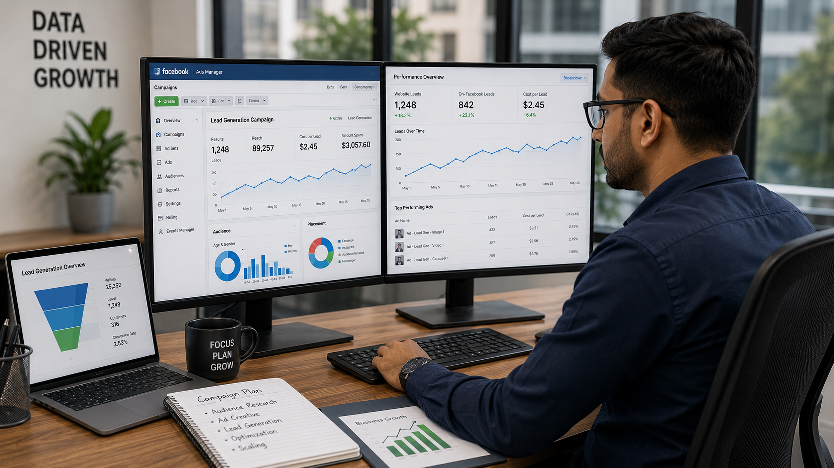
In today's competitive digital marketplace, generating a steady flow of qualified leads is essential for business growth. While there are many marketing channels available, Facebook Ads remains one of the most effective platforms for reaching potential customers, building brand awareness, and generating high-quality leads.

With billions of active users worldwide, Facebook provides businesses with powerful targeting capabilities that allow advertisers to reach specific audiences based on demographics, interests, behaviors, locations, and purchasing patterns. This level of precision makes Facebook Ads an invaluable tool for businesses seeking measurable marketing results.
However, many businesses struggle to achieve success because they launch campaigns without a clear strategy. Effective lead generation requires more than simply creating an advertisement and hoping for results. It involves careful planning, audience research, compelling ad creatives, optimized landing pages, and continuous performance monitoring.
This guide explains how businesses can use Facebook Ads strategically to generate qualified leads and improve marketing return on investment.
Why Facebook Ads Are Effective for Lead Generation
Facebook Ads offer several advantages that make them ideal for lead generation campaigns.
Benefits include:
- Advanced audience targeting
- Cost-effective advertising
- Large user base
- Detailed performance tracking
- Lead collection automation
- Retargeting opportunities
- Multiple ad formats
- Scalability for businesses of all sizes
Unlike traditional advertising, Facebook Ads allow businesses to target individuals who are most likely to be interested in their products or services, reducing wasted marketing spend.
Step 1: Define Your Lead Generation Goals
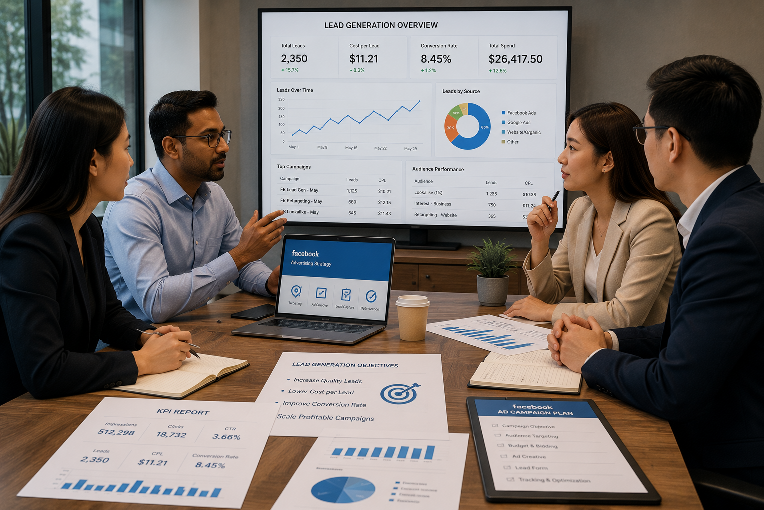
Before launching any Facebook advertising campaign, businesses must define clear objectives.
Common lead generation goals include:
Service Inquiries
Generating inquiries for consulting, legal, financial, or professional services.
Product Demonstrations
Encouraging prospects to request product demos.
Newsletter Sign-Ups
Building an email marketing list.
Appointment Bookings
Driving consultations or meetings.
Quote Requests
Generating requests for pricing information.
Your goals should be measurable and aligned with your overall business objectives.
For example:
- Generate 100 qualified leads within 30 days.
- Reduce cost per lead by 20% over three months.
- Increase consultation bookings by 30%.
Clearly defined goals provide direction and improve campaign effectiveness.
Step 2: Identify Your Target Audience
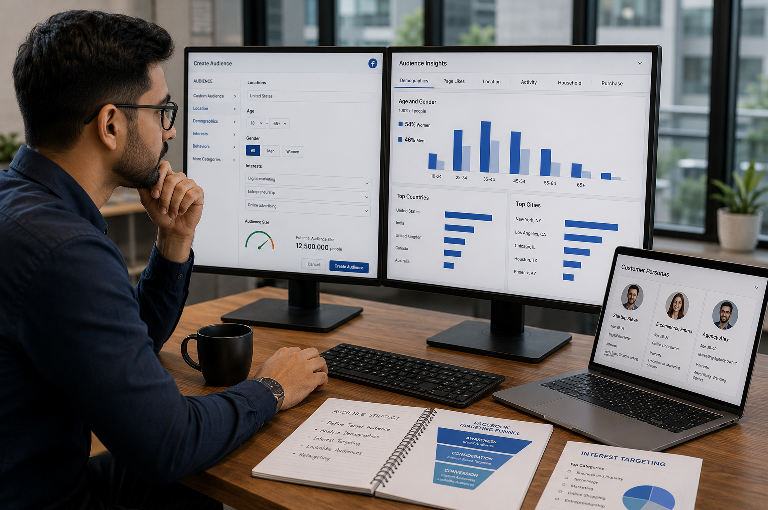
One of Facebook's greatest strengths is its targeting capability.
The success of your campaign depends heavily on reaching the right audience.
Consider factors such as:
- Age
- Gender
- Location
- Occupation
- Income level
- Interests
- Online behavior
- Purchase history
For example, a business consulting firm may target:
- Entrepreneurs
- Startup founders
- Small business owners
- Corporate executives
Creating detailed customer personas helps improve targeting accuracy and campaign performance.
Step 3: Choose the Right Campaign Objective
Facebook offers several campaign objectives, but for lead generation, businesses should focus on:
Lead Generation Campaigns
These use Facebook Lead Forms, allowing users to submit information without leaving Facebook.
Conversion Campaigns
Designed to drive actions on your website, such as form submissions or bookings.
Traffic Campaigns
Used to direct users to a landing page where they can become leads.
Selecting the appropriate objective ensures Facebook's algorithm optimizes delivery toward users most likely to complete your desired action.
Step 4: Create an Irresistible Offer
People rarely provide their contact information without receiving something valuable in return.
Effective lead magnets include:
- Free consultations
- Business audits
- E-books
- Industry reports
- Checklists
- Templates
- Webinars
- Discount offers
For example:
"Get a Free Business Growth Assessment Worth $250."
A compelling offer significantly increases conversion rates.
The stronger the perceived value, the more likely users are to submit their information.
Step 5: Design High-Converting Facebook Ads

Your advertisement is often the first interaction prospects have with your business.
Effective ads should include:
Attention-Grabbing Visuals
Use professional images or videos that capture attention.
Clear Headlines
Examples:
- Generate More Sales in 2026
- Free Business Growth Consultation
- Discover Hidden Growth Opportunities
Benefit-Focused Copy
Explain how your offer solves a specific problem.
Strong Call-to-Action
Examples:
- Learn More
- Book Now
- Get Started
- Claim Your Free Consultation
Avoid overly promotional language and focus on delivering value.
Step 6: Optimize Your Landing Page
If your campaign directs users to a website, the landing page plays a critical role in conversions.
An effective landing page should include:
Clear Headline
Explain the offer immediately.
Concise Copy
Focus on benefits rather than features.
Simple Form
Request only essential information.
Social Proof
Include testimonials, reviews, or case studies.
Strong Call-to-Action
Make it obvious what users should do next.
The landing page should align closely with the advertisement to maintain consistency and improve conversion rates.
Step 7: Use Facebook Lead Forms Effectively

Facebook Lead Forms simplify the lead generation process by allowing users to submit their information directly within Facebook.
Best practices include:
- Keep forms short
- Ask only necessary questions
- Provide a clear privacy statement
- Use custom thank-you screens
- Include follow-up instructions
Reducing friction increases the likelihood of form completion.
Step 8: Implement Retargeting Campaigns
Most users do not convert on their first interaction.
Retargeting allows businesses to reconnect with:
- Website visitors
- Video viewers
- Previous leads
- Page followers
- Cart abandoners
Retargeting campaigns often produce higher conversion rates because the audience is already familiar with your brand.
These campaigns can significantly improve overall advertising performance.
Step 9: Monitor Performance and Optimize
Successful Facebook advertising requires ongoing analysis.
Key metrics include:
Cost Per Lead (CPL)
Measures how much each lead costs.
Click-Through Rate (CTR)
Shows how many users click your advertisement.
Conversion Rate
Measures the percentage of users who become leads.
Lead Quality
Evaluates whether generated leads are likely to become customers.
Return on Ad Spend (ROAS)
Measures revenue generated relative to advertising costs.
Regular optimization helps improve campaign efficiency and profitability.
Common Facebook Lead Generation Mistakes
Many businesses fail to achieve results because they:
- Target overly broad audiences
- Use weak offers
- Create poor-quality ads
- Ignore landing page optimization
- Fail to follow up with leads
- Neglect campaign testing
Avoiding these mistakes can significantly improve performance.
The Importance of Lead Nurturing
Generating leads is only the first step.
Businesses should implement follow-up processes such as:
- Email sequences
- Phone calls
- SMS campaigns
- Consultation scheduling
- Personalized offers
Timely follow-up improves conversion rates and increases revenue opportunities.
Conclusion
Facebook Ads remains one of the most powerful lead generation platforms available to businesses today. Its advanced targeting capabilities, flexible ad formats, and detailed analytics provide organizations with an effective way to attract qualified prospects and grow their customer base.
By defining clear objectives, understanding your audience, creating compelling offers, designing high-converting ads, optimizing landing pages, and continuously monitoring performance, businesses can generate a consistent stream of valuable leads.
When implemented strategically, Facebook Ads can become a predictable and scalable source of business growth, helping organizations achieve their marketing and sales goals more efficiently.
FAQ Section
What are Facebook Lead Ads?
Facebook Lead Ads are advertisements designed to collect customer information directly within Facebook using built-in lead forms.
How much should I spend on Facebook Ads for lead generation?
The ideal budget depends on your industry, competition, and goals. Many SMEs begin with a modest daily budget and increase spending based on performance.
Are Facebook Ads effective for small businesses?
Yes. Facebook Ads allow small businesses to target specific audiences and generate qualified leads without requiring large advertising budgets.
What is a good cost per lead?
A good cost per lead varies by industry, target audience, and customer lifetime value. Businesses should focus on lead quality as well as cost.
Why is audience targeting important?
Targeting ensures advertisements are shown to people most likely to be interested in your products or services, improving campaign efficiency.
Should I use Facebook Lead Forms or landing pages?
Both can be effective. Lead Forms reduce friction and often generate more leads, while landing pages provide greater control over the user experience.
How can I improve Facebook Ad conversion rates?
Improve targeting, strengthen your offer, use compelling visuals, simplify forms, optimize landing pages, and continuously test different ad variations.