
Loading...

Loading page description...

Home / Page

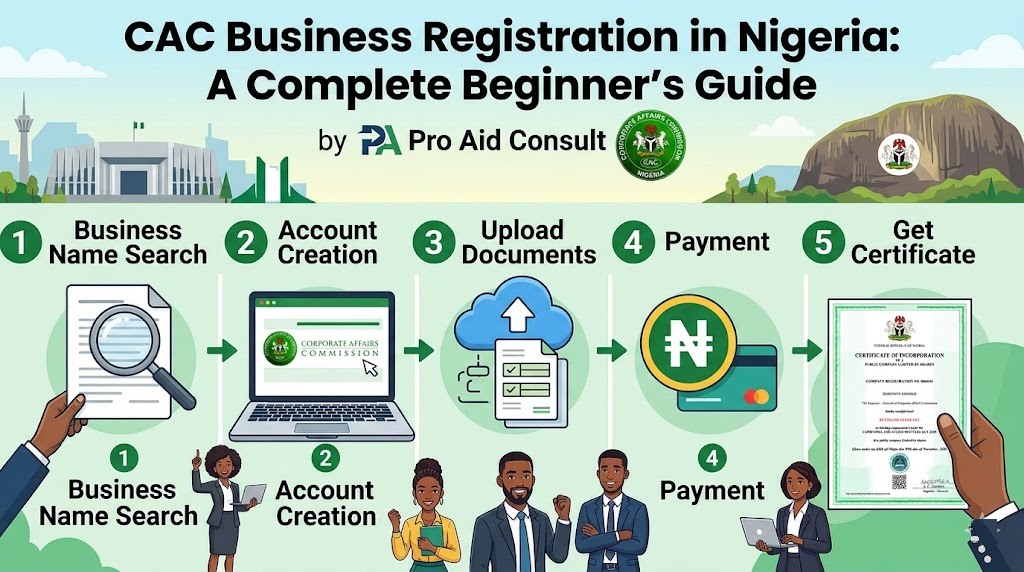
CAC Business Registration in Nigeria: A Complete Beginner’s Guide by Pro Aid Consult

Starting a business in Nigeria is an exciting journey, but many entrepreneurs make the mistake of operating without proper registration. While it may seem easier to begin trading immediately, registering your business with the Corporate Affairs Commission (CAC) is one of the most important steps toward building a legitimate, trustworthy, and sustainable enterprise.

Whether you are launching a small online store, consulting firm, fashion brand, logistics company, restaurant, or professional service business, CAC registration provides the legal foundation your business needs to grow.

Unfortunately, many first-time entrepreneurs are unsure about the registration process, requirements, costs, and benefits. This guide explains everything beginners need to know about CAC business registration in Nigeria and how Pro Aid Consult can help simplify the process.


What Is CAC Registration?

The Corporate Affairs Commission (CAC) is the government agency responsible for regulating and managing business registrations in Nigeria.

CAC registration officially recognizes your business as a legal entity and provides documentation that proves your business exists under Nigerian law.

Once registered, your business receives official records that can be used for banking, taxation, contracts, licensing, and other business activities.


Why Is CAC Registration Important?

Many business owners ask:

"Can I operate a business without CAC registration?"

Technically, some small informal businesses operate without registration. However, doing so can expose you to several limitations and risks.

Registering your business offers significant advantages, including:

Legal Recognition

CAC registration gives your business legal status, making it easier to enter contracts, secure partnerships, and conduct official transactions.

Customer Trust

Consumers are more likely to do business with registered companies because registration demonstrates professionalism and credibility.

Access to Business Banking

Most financial institutions require CAC registration documents before opening a corporate account.

Eligibility for Funding

Investors, grant providers, and lenders often request proof of business registration before approving financial support.

Regulatory Compliance

Registration helps businesses comply with government regulations and industry requirements.


Types of Business Registration Available in Nigeria

Before registering, it is important to choose the right business structure.

Business Name Registration

This is one of the most common options for small businesses and sole proprietors.

Suitable for:

  • Freelancers
  • Consultants
  • Online businesses
  • Retail shops
  • Service providers

Business name registration is generally simpler and more affordable than company incorporation.

Private Limited Company (Ltd)

A private limited company is a separate legal entity from its owners.

Suitable for:

  • Growing businesses
  • Startups seeking investors
  • Medium-sized enterprises
  • Professional service firms

This structure offers greater credibility and liability protection.

Incorporated Trustees

This registration type is commonly used for:

  • Non-governmental organizations (NGOs)
  • Religious organizations
  • Associations
  • Foundations

Each registration option serves different business objectives, making professional guidance valuable during the selection process.


Requirements for CAC Registration

The requirements may vary depending on the registration type, but generally include:

Proposed Business Name

You will need one or more preferred business names for availability checks and reservation.

Business Information

Details such as:

  • Business activities
  • Business address
  • Contact information

Owner Information

Information about the proprietor, directors, or shareholders may be required depending on the registration category.

Valid Identification

Examples include:

  • National ID Card
  • International Passport
  • Driver's License
  • Voter's Card

Providing accurate information helps prevent processing delays.


Step-by-Step CAC Registration Process

Understanding the registration process can help business owners prepare effectively.

Step 1: Business Name Search

The first step is verifying whether your preferred business name is available.

A unique and compliant name increases the likelihood of approval.

Step 2: Name Reservation

Once approved, the name is reserved to prevent other applicants from using it during the registration process.

Step 3: Documentation Submission

Required information and supporting documents are submitted for processing.

Step 4: Application Review

The CAC reviews the application to ensure compliance with registration requirements.

Step 5: Certificate Issuance

Upon successful approval, registration documents and certificates are issued.

These documents serve as official proof of registration.


Common Mistakes to Avoid During Registration

Many entrepreneurs experience delays because of avoidable errors.

Choosing Restricted Names

Certain words and business names may require additional approvals.

Providing Incorrect Information

Inaccurate details can lead to rejection or future compliance issues.

Selecting the Wrong Business Structure

Choosing an unsuitable registration category may create operational limitations later.

Using Unqualified Agents

Working with inexperienced individuals can result in documentation errors and unnecessary delays.

Professional registration support helps reduce these risks.


How CAC Registration Supports Business Growth

Business registration is not merely a legal requirement—it is a growth strategy.

Registered businesses often enjoy:

Better Business Opportunities

Many organizations prefer dealing with registered businesses when awarding contracts.

Increased Investor Confidence

Investors typically view registered entities as more structured and reliable.

Improved Brand Image

Registration enhances professionalism and strengthens market credibility.

Easier Tax Compliance

Registered businesses can obtain Tax Identification Numbers (TINs) and comply with tax regulations more effectively.

Expansion Potential

Businesses planning to scale operations often require proper registration as part of their growth strategy.


Risks of Operating Without CAC Registration

Many entrepreneurs underestimate the consequences of operating informally.

Businesses without registration may encounter:

  • Difficulty opening corporate bank accounts
  • Reduced customer trust
  • Limited access to financing
  • Challenges securing contracts
  • Regulatory complications

For a more detailed explanation, read our article:

5 Risks of Operating a Business Without CAC Registration

Understanding these risks can help business owners make informed decisions about formalizing their operations.


Why Choose Pro Aid Consult for CAC Registration?

At Pro Aid Consult, we understand that many entrepreneurs are focused on building and growing their businesses rather than navigating administrative procedures.

Our registration services are designed to make the process simple, efficient, and stress-free.

Our Services Include:

  • Business name registration
  • Company incorporation
  • NGO registration
  • Name availability checks
  • Documentation support
  • Compliance guidance
  • Post-registration advisory services

Our experienced team helps clients avoid costly mistakes while ensuring their registrations are completed accurately.


Frequently Asked Questions

How Long Does CAC Registration Take?

Processing times may vary depending on the registration type and application requirements.

Can I Register an Online Business?

Yes. Online businesses can and should be registered to improve credibility and legal protection.

Do I Need CAC Registration Before Opening a Business Bank Account?

In most cases, yes. Banks generally require registration documents before opening a corporate account.

Can I Change My Business Structure Later?

Yes, but restructuring may involve additional procedures and regulatory requirements.


Conclusion

CAC registration is one of the most important investments a business owner can make. It provides legal recognition, enhances credibility, supports compliance, and opens doors to funding, partnerships, and growth opportunities.

Whether you are starting a small business, launching a startup, or expanding an existing enterprise, proper registration creates a strong foundation for long-term success.

At Pro Aid Consult, we help entrepreneurs and organizations complete their CAC registration quickly, accurately, and professionally. Our goal is to simplify the process so you can focus on building a successful business with confidence.

If you are ready to register your business in Nigeria, Pro Aid Consult is here to guide you every step of the way.


How Pro Aid Consult Helps Businesses Build Scalable Growth Structures

Many businesses start with a great idea, a strong product, or a passionate founder. However, as the business grows, managing operations, customers, employees, finances, and compliance becomes increasingly complex. Without a scalable growth structure, even profitable businesses can struggle with inefficiencies, inconsistent revenue, and operational bottlenecks.

This is where Pro Aid Consult steps in. As a trusted business development and consulting firm, Pro Aid Consult helps businesses create sustainable systems, strategic frameworks, and growth-focused processes that enable long-term success.

In this article, we'll explore what scalable growth structures are, why they matter, and how Pro Aid Consult helps businesses establish a solid foundation for expansion.


What Is a Scalable Growth Structure?

A scalable growth structure refers to the systems, processes, strategies, and operational frameworks that allow a business to grow without experiencing significant disruptions or increased inefficiencies.

Simply put, scalability means your business can handle increased demand, customers, revenue, and operations without proportionally increasing costs or complexity.

Businesses with scalable structures typically have:

  • Clear organizational systems
  • Defined operational processes
  • Effective marketing strategies
  • Strong financial management
  • Compliance and legal frameworks
  • Technology-driven workflows
  • Measurable business goals

Without these elements, growth can become difficult to manage and may even lead to declining performance.


Why Many Businesses Struggle to Scale

Many entrepreneurs focus heavily on sales and customer acquisition while neglecting the systems needed to support growth.

Common challenges include:

1. Lack of Strategic Planning

Many businesses operate without a documented growth strategy, making decision-making reactive rather than proactive.

2. Inefficient Processes

Manual processes often consume valuable time and increase the likelihood of errors.

3. Poor Financial Management

Without proper budgeting, forecasting, and financial oversight, businesses may struggle to sustain growth.

4. Weak Brand Positioning

A business may offer excellent products or services but fail to communicate its value effectively to the target audience.

5. Compliance Challenges

Regulatory requirements, tax obligations, and business registrations can become significant obstacles if not managed properly.


How Pro Aid Consult Builds Scalable Growth Structures

At Pro Aid Consult, scalability is approached through a combination of strategic planning, operational improvement, compliance support, and digital transformation.

Business Development Strategy

Growth starts with a clear roadmap.

Pro Aid Consult works closely with business owners to evaluate their current operations, identify growth opportunities, and develop customized strategies aligned with their goals.

This includes:

  • Business assessments
  • Market opportunity analysis
  • Revenue growth planning
  • Competitive positioning
  • Expansion strategies

By creating a structured growth plan, businesses gain clarity on where they are and how to reach their desired destination.


Process Optimization and Operational Efficiency

As businesses grow, inefficient systems can create bottlenecks that limit performance.

Pro Aid Consult helps organizations streamline operations by:

  • Documenting workflows
  • Improving team productivity
  • Automating repetitive tasks
  • Creating standard operating procedures (SOPs)
  • Implementing performance tracking systems

These improvements allow businesses to serve more customers without sacrificing quality.


Digital Growth and Online Brand Development

Modern businesses require a strong digital presence to remain competitive.

Pro Aid Consult provides support in:

  • Website development
  • Search Engine Optimization (SEO)
  • Social media management
  • Digital marketing campaigns
  • Online brand positioning

A well-optimized digital presence helps businesses attract qualified leads, increase visibility, and generate sustainable growth opportunities.

For additional growth-focused insights, businesses can also explore our guide on 10 Business Growth Strategies Nigerian SMEs Can Use in 2026

This resource provides practical strategies that complement a scalable growth framework.


Market Research and Business Intelligence

Successful businesses make decisions based on data rather than assumptions.

Pro Aid Consult conducts detailed market research to help businesses understand:

  • Customer behavior
  • Industry trends
  • Market demand
  • Competitor activities
  • Growth opportunities

These insights enable business owners to make informed decisions and reduce risks associated with expansion.


Compliance and Regulatory Support

Compliance is often overlooked until it becomes a problem.

Pro Aid Consult assists businesses with:

  • Business registrations
  • Corporate compliance
  • Tax consultation
  • Regulatory documentation
  • Audit preparation

By maintaining compliance, businesses reduce legal risks and create a more stable environment for growth.


Financial Structure and Growth Planning

Growth requires more than increasing revenue. Businesses must also manage resources effectively.

Pro Aid Consult supports organizations through:

  • Financial planning
  • Budget development
  • Cash flow management
  • Business forecasting
  • Investment readiness support

These services help businesses make strategic financial decisions while preparing for future expansion.


Benefits of Building a Scalable Business Structure

Businesses that invest in scalable systems often experience several advantages:

Increased Productivity

Efficient systems allow teams to focus on high-value activities rather than repetitive tasks.

Improved Customer Experience

Structured operations ensure consistent service delivery and customer satisfaction.

Better Decision-Making

Access to accurate data and performance metrics supports smarter business decisions.

Sustainable Revenue Growth

Businesses can manage increasing demand without overwhelming existing resources.

Reduced Operational Risks

Documented processes and compliance frameworks help minimize costly mistakes.


Who Can Benefit from Pro Aid Consult's Services?

Pro Aid Consult works with a wide range of businesses, including:

  • Startups
  • Small and Medium-Sized Enterprises (SMEs)
  • Growing service businesses
  • E-commerce brands
  • Professional service providers
  • Corporate organizations

Whether a business is just starting or preparing for expansion, scalable growth structures can significantly improve long-term success.


Frequently Asked Questions

What does business scalability mean?

Business scalability refers to the ability of a company to increase revenue, customers, and operations without experiencing significant increases in operational costs or inefficiencies.

Why is scalability important?

Scalability helps businesses maintain profitability, improve efficiency, and support sustainable long-term growth.

How can Pro Aid Consult help my business grow?

Pro Aid Consult provides strategic planning, market research, digital marketing, compliance support, business development consulting, and operational optimization services designed to support sustainable growth.

Do small businesses need growth structures?

Yes. Even small businesses benefit from having systems, processes, and strategic plans that prepare them for future growth.


Conclusion

Growth is not simply about increasing sales; it's about building a business that can sustain and manage that growth effectively. Without the right systems, strategies, and operational structures, expansion can create challenges that limit long-term success.

Pro Aid Consult helps businesses develop scalable growth structures that support efficiency, compliance, profitability, and sustainable expansion. By combining strategic planning, digital growth solutions, market intelligence, and business development expertise, Pro Aid Consult empowers organizations to build stronger foundations for the future.

Businesses that invest in scalability today are better positioned to compete, adapt, and thrive in an increasingly competitive marketplace.

Common Financial Management Errors Businesses Should Avoid

Introduction

Financial management is one of the most important aspects of running a successful business. Regardless of whether you operate a startup, small business, or growing enterprise, your ability to manage finances effectively can determine your long-term success or failure.

Many businesses focus heavily on increasing sales and attracting customers but overlook financial management practices that keep the business healthy and sustainable. Poor financial decisions can lead to cash flow problems, compliance issues, mounting debts, and even business closure.

The good news is that many financial management mistakes are preventable. By understanding common errors and implementing the right systems, business owners can improve profitability, maintain financial stability, and position their businesses for growth.

In this article, Pro Aid Consult highlights the most common financial management errors businesses should avoid and provides practical solutions to help entrepreneurs make smarter financial decisions.


Why Financial Management Matters

Effective financial management allows business owners to:

  • Monitor business performance
  • Manage cash flow efficiently
  • Meet tax and regulatory obligations
  • Plan for growth and expansion
  • Make informed business decisions
  • Reduce financial risks

Businesses with strong financial management systems are more likely to survive economic challenges and achieve sustainable growth.


1. Mixing Personal and Business Finances

One of the most common mistakes among small business owners is using the same account for personal and business transactions.

When personal and business expenses are combined, it becomes difficult to:

  • Track profitability
  • Prepare financial statements
  • Calculate taxes accurately
  • Monitor cash flow

How to Avoid This Mistake

Open a dedicated business bank account and ensure all business transactions are conducted separately from personal spending.

Maintaining separate accounts improves transparency and simplifies bookkeeping.


2. Poor Record Keeping

Many businesses fail to maintain accurate and organized financial records.

Missing invoices, incomplete expense records, and poor bookkeeping practices can create serious problems when preparing financial reports or responding to tax authorities.

Common Record-Keeping Issues

  • Lost receipts
  • Unrecorded sales
  • Missing supplier invoices
  • Inaccurate expense tracking

Solution

Implement a reliable bookkeeping system and update records regularly. Digital accounting software can help automate record keeping and improve accuracy.


3. Ignoring Cash Flow Management

A profitable business can still fail if it runs out of cash.

Cash flow refers to the movement of money into and out of a business. Many companies focus solely on revenue while ignoring actual cash availability.

Warning Signs of Cash Flow Problems

  • Difficulty paying suppliers
  • Delayed employee salaries
  • Frequent borrowing
  • Overdue bills

Solution

Prepare monthly cash flow forecasts and monitor cash movements closely. Understanding future cash requirements helps prevent financial emergencies.


4. Failing to Budget Properly

Operating without a budget is like driving without a roadmap.

Without proper budgeting, businesses often overspend, underestimate expenses, and struggle to allocate resources effectively.

Benefits of Budgeting

  • Better financial control
  • Improved spending decisions
  • Easier growth planning
  • Enhanced profitability

Solution

Create an annual budget and review it regularly. Compare actual performance against budget projections to identify areas requiring adjustment.


5. Neglecting Tax Obligations

Many business owners underestimate the importance of tax compliance.

Failure to comply with tax requirements can lead to penalties, interest charges, audits, and legal complications.

Business owners should understand their obligations regarding:

  • Company Income Tax
  • Value Added Tax (VAT)
  • Pay-As-You-Earn (PAYE)
  • Withholding Tax

For a detailed guide on tax compliance requirements, read our article on Basic Tax Obligations Every Nigerian Business Owner Should Understand

Understanding your tax responsibilities helps protect your business from unnecessary financial and regulatory risks.


6. Not Monitoring Business Performance

Some business owners only review financial reports when problems arise.

This reactive approach often causes important warning signs to be overlooked.

Key Financial Metrics Every Business Should Monitor

  • Revenue growth
  • Profit margins
  • Operating expenses
  • Cash flow position
  • Outstanding debts
  • Customer payment trends

Solution

Review financial reports monthly and use the information to make strategic decisions.

Regular performance monitoring helps identify challenges before they become major problems.


7. Overreliance on Debt Financing

Loans can support business growth, but excessive borrowing can create financial pressure.

Many businesses take on debt without evaluating repayment capacity or long-term financial implications.

Risks of Excessive Debt

  • Increased financial stress
  • Reduced profitability
  • Cash flow constraints
  • Difficulty securing future financing

Solution

Borrow only when necessary and ensure loan repayments fit comfortably within your financial projections.


8. Lack of Financial Controls

Weak internal controls can expose businesses to fraud, theft, and financial mismanagement.

Without proper oversight, unauthorized transactions and accounting errors may go undetected.

Examples of Effective Financial Controls

  • Approval procedures for expenditures
  • Regular bank reconciliations
  • Segregation of financial duties
  • Routine financial reviews

Solution

Establish clear financial procedures and regularly evaluate compliance within the organization.


9. Delaying Professional Financial Advice

Many business owners wait until financial problems become severe before seeking expert assistance.

Professional guidance can help businesses avoid costly mistakes and identify opportunities for improvement.

When to Seek Professional Support

  • During rapid business growth
  • Before applying for loans
  • When preparing tax filings
  • During financial restructuring
  • Before major investments

Working with experienced financial consultants can provide valuable insights and improve business performance.


10. Ignoring Business Audits

Some businesses view audits as unnecessary expenses rather than valuable management tools.

However, audits can reveal hidden risks, improve financial accuracy, and strengthen internal controls.

Benefits of Regular Audits

  • Improved financial transparency
  • Increased investor confidence
  • Better compliance
  • Reduced financial risks
  • Stronger business credibility

Professional audit services help ensure financial records accurately reflect business performance.


Frequently Asked Questions

What Is the Most Common Financial Management Mistake?

Poor cash flow management is one of the most common reasons businesses experience financial difficulties, even when sales are strong.

How Often Should Financial Records Be Reviewed?

Financial reports should ideally be reviewed monthly to monitor performance and identify potential issues early.

Can Professional Consultants Help Improve Financial Management?

Yes. Financial consultants provide expert guidance on budgeting, compliance, audits, tax planning, and overall financial strategy.

Why Is Tax Compliance Important?

Tax compliance helps businesses avoid penalties, maintain credibility, and meet legal requirements.


Conclusion

Financial management plays a critical role in business success. While many entrepreneurs focus on increasing revenue, long-term growth depends on how effectively finances are managed behind the scenes.

Avoiding common mistakes such as poor record keeping, weak cash flow management, inadequate budgeting, tax non-compliance, and lack of financial oversight can significantly improve business performance.

At Pro Aid Consult, we help businesses strengthen their financial systems through professional consulting, audit services, tax advisory, compliance support, and business development solutions.

By implementing sound financial management practices today, your business can build a stronger foundation for sustainable growth and future success.

Professional Audit Services by Pro Aid Consult for SMEs in Nigeria

Why Every Growing Business Needs Professional Audit Services

As businesses grow, financial management becomes more complex. Many Small and Medium Enterprises (SMEs) in Nigeria focus on increasing sales, attracting customers, and expanding operations, but often overlook one critical aspect of business success—financial transparency and accountability.

This is where professional audit services become essential.

An audit is more than just a regulatory requirement. It is a valuable business tool that helps owners understand their financial position, identify risks, improve internal controls, and build trust with investors, banks, customers, and government agencies.

At Pro Aid Consult, we provide comprehensive audit services designed specifically for Nigerian SMEs. Our goal is to help business owners maintain accurate financial records, comply with regulatory requirements, and make informed business decisions based on reliable financial information.

In this article, we explain the importance of professional audit services, common challenges SMEs face, and how Pro Aid Consult helps businesses achieve financial clarity and long-term success.


What Is a Business Audit?

A business audit is an independent examination of a company's financial records, accounting systems, transactions, and internal controls.

The purpose of an audit is to verify that financial statements accurately reflect the company's financial performance and position.

An audit helps answer important questions such as:

  • Are the financial records accurate?
  • Is the business complying with relevant regulations?
  • Are there financial risks that need attention?
  • Are company funds being properly managed?
  • Can stakeholders trust the financial reports?

For SMEs, regular audits provide confidence that the business is operating on a solid financial foundation.


Why Audit Services Are Important for Nigerian SMEs

Many business owners assume audits are only necessary for large corporations. However, SMEs can benefit significantly from professional auditing services.

1. Improve Financial Accuracy

Poor bookkeeping and inaccurate financial records can lead to costly mistakes.

Professional audits help identify:

  • Accounting errors
  • Duplicate transactions
  • Missing records
  • Incorrect financial reporting

By correcting these issues early, businesses can make better financial decisions and avoid future complications.

2. Strengthen Business Credibility

Financial transparency builds trust.

Banks, investors, government agencies, and business partners often prefer working with organizations that maintain audited financial statements.

An independent audit demonstrates that your business takes financial accountability seriously.

3. Support Loan and Funding Applications

Many financial institutions require audited financial statements before approving business loans.

Whether you're applying for:

  • SME financing
  • Business expansion loans
  • Investor funding
  • Government grants

Audited accounts improve your credibility and increase the likelihood of approval.

4. Ensure Regulatory Compliance

Nigerian businesses must comply with various financial and tax regulations.

Professional audits help ensure compliance with:

  • Corporate Affairs Commission (CAC) requirements
  • Federal Inland Revenue Service (FIRS) obligations
  • State tax regulations
  • Industry-specific compliance standards

Failure to comply may result in penalties, fines, or legal complications.


Common Financial Challenges Faced by SMEs

Many SMEs struggle with financial management due to limited resources and lack of specialized expertise.

Some common challenges include:

Incomplete Financial Records

Many businesses fail to maintain organized accounting records, making it difficult to track income and expenses accurately.

Poor Internal Controls

Without proper financial controls, businesses become vulnerable to fraud, theft, and financial mismanagement.

Tax Compliance Issues

Incorrect tax calculations, late filings, and missing documentation can expose businesses to regulatory penalties.

Cash Flow Management Problems

Many SMEs generate revenue but struggle with cash flow because financial information is not accurately monitored.

Professional audits help identify these issues and provide recommendations for improvement.


How Pro Aid Consult Helps SMEs Maintain Financial Integrity

At Pro Aid Consult, we understand the unique challenges Nigerian businesses face.

Our audit services are tailored to help SMEs improve financial management, strengthen compliance, and support sustainable growth.

Comprehensive Financial Review

We carefully examine financial records to identify inaccuracies, inconsistencies, and potential risks.

Internal Control Assessment

Our experts evaluate existing financial processes and recommend improvements that help protect business assets.

Compliance Verification

We help businesses ensure compliance with relevant financial, tax, and regulatory requirements.

Risk Identification

Our audit process identifies areas that may expose your business to financial losses or operational inefficiencies.

Actionable Recommendations

Beyond identifying issues, we provide practical recommendations that business owners can implement immediately.


Signs Your Business May Need an Audit

Many business owners are unsure when to seek professional audit services.

You should consider an audit if:

  • Financial records appear disorganized
  • Revenue figures seem inconsistent
  • You are preparing for investment opportunities
  • Your business is applying for loans
  • Tax authorities request financial information
  • Internal financial controls are weak
  • You suspect financial irregularities
  • The business is experiencing rapid growth

Conducting an audit before problems arise is often more effective and less expensive than addressing issues after they become serious.


Benefits of Working with Pro Aid Consult

Choosing the right audit partner can make a significant difference in your business performance.

Industry Experience

Our team has experience working with businesses across multiple industries, providing practical solutions tailored to each client's needs.

SME-Focused Approach

We understand the realities of small and medium-sized businesses and provide services designed specifically for their operational and financial requirements.

Professional Guidance

We help business owners understand complex financial information in simple, actionable terms.

Confidential and Reliable Service

We maintain strict confidentiality while delivering accurate and professional audit reports.

Long-Term Business Support

Our services go beyond compliance. We help businesses develop stronger financial systems that support sustainable growth.


Frequently Asked Questions About Audit Services

Is an Audit Different from Bookkeeping?

Yes. Bookkeeping involves recording daily financial transactions, while an audit independently reviews those records to verify their accuracy.

How Often Should SMEs Conduct Audits?

Many businesses benefit from annual audits. However, the frequency may vary depending on business size, industry requirements, and growth objectives.

Can an Audit Help Reduce Financial Risks?

Yes. Audits identify weaknesses in financial controls, helping businesses address risks before they become costly problems.

Are Audits Only for Large Companies?

No. SMEs can gain substantial benefits from professional audits, particularly when seeking growth, financing, or regulatory compliance.


Conclusion

Professional audit services are an essential investment for any SME that wants to build a strong financial foundation, improve transparency, and achieve sustainable growth.

An independent audit helps business owners understand their financial position, strengthen internal controls, comply with regulations, and build credibility with stakeholders.

At Pro Aid Consult, we are committed to helping Nigerian businesses achieve financial excellence through reliable, professional, and practical audit services. Whether you are preparing for expansion, seeking funding, or simply want greater confidence in your financial records, our experienced team is ready to support your business every step of the way.

Contact Pro Aid Consult today to learn how our professional audit services can help your business improve financial accountability, reduce risks, and position itself for long-term success.

Basic Tax Obligations Every Nigerian Business Owner Should Understand

Running a business in Nigeria comes with numerous responsibilities, and one of the most important is understanding and complying with tax obligations. Whether you operate a small startup, a growing enterprise, or a registered company, tax compliance is essential for avoiding penalties, building credibility, and ensuring long-term business success.

Many business owners focus heavily on sales, marketing, and customer acquisition while overlooking their tax responsibilities. Unfortunately, tax non-compliance can lead to fines, legal issues, and disruptions to business operations. Understanding the basics of Nigeria's tax system can help entrepreneurs stay compliant and make informed financial decisions.

This guide explains the key tax obligations every Nigerian business owner should understand and provides practical tips for staying compliant.


Why Tax Compliance Matters for Businesses

Taxes play a crucial role in funding government services and infrastructure development. For business owners, complying with tax regulations offers several benefits:

  • Avoidance of penalties and legal sanctions
  • Increased business credibility
  • Easier access to loans and investment opportunities
  • Better financial record-keeping
  • Eligibility for government contracts and grants

Businesses that maintain proper tax records are often viewed as more trustworthy by financial institutions, investors, and potential partners.


1. Register Your Business Properly

Before discussing taxes, every business should be legally registered with the appropriate authorities.

Businesses operating in Nigeria are typically registered through the Corporate Affairs Commission (CAC). Registration provides legal recognition and allows the business to obtain a Tax Identification Number (TIN), which is required for tax purposes.

A properly registered business is better positioned to comply with tax laws and access various business opportunities.

Key Documents Often Required:

  • CAC Registration Certificate
  • Tax Identification Number (TIN)
  • Business bank account
  • Company records and financial statements

2. Understand Company Income Tax (CIT)

Company Income Tax is one of the primary taxes imposed on businesses in Nigeria.

This tax is charged on the profits generated by companies operating within the country.

Current Company Income Tax Structure

Small Companies

Businesses with annual turnover below ₦25 million are generally exempt from paying Company Income Tax.

Medium-Sized Companies

Businesses with annual turnover between ₦25 million and ₦100 million may be subject to a reduced tax rate.

Large Companies

Businesses with annual turnover exceeding ₦100 million are subject to the standard Company Income Tax rate.

Business owners should maintain accurate financial records to determine their tax obligations correctly.


3. Value Added Tax (VAT)

Value Added Tax (VAT) is one of the most common taxes affecting Nigerian businesses.

VAT is charged on most goods and services sold within Nigeria. Businesses that meet the required threshold are expected to:

  • Register for VAT
  • Collect VAT from customers
  • File VAT returns
  • Remit collected VAT to the appropriate tax authority

Common VAT Mistakes to Avoid

  • Failing to register for VAT
  • Not issuing proper invoices
  • Missing filing deadlines
  • Poor record-keeping

Maintaining accurate sales records helps simplify VAT compliance.


4. Pay-As-You-Earn (PAYE) Tax for Employees

If your business employs staff, you may have PAYE obligations.

PAYE is a system through which employers deduct personal income tax from employees' salaries and remit it to the relevant state tax authority.

Employer Responsibilities

  • Calculate employee tax deductions correctly
  • Deduct taxes monthly
  • Remit deductions promptly
  • Maintain payroll records

Failure to comply may result in penalties and interest charges.


5. Withholding Tax (WHT)

Withholding Tax serves as an advance payment of income tax.

Businesses are often required to deduct a percentage from certain payments made to contractors, suppliers, consultants, or service providers.

Transactions Commonly Subject to WHT

  • Consultancy services
  • Professional fees
  • Contract payments
  • Rent payments
  • Commission payments

Keeping proper records of withholding tax deductions helps avoid disputes during tax audits.


6. Education Tax and Other Applicable Taxes

Depending on the size and nature of your business, additional taxes may apply.

Examples include:

Education Tax

Certain companies may be required to contribute toward educational development through education tax assessments.

Industrial Training Fund (ITF)

Some employers may be required to contribute to workforce development initiatives.

Pension Contributions

Employers meeting statutory requirements must make pension contributions on behalf of eligible employees.

Understanding all applicable obligations helps businesses avoid unexpected liabilities.


7. Keep Proper Financial Records

One of the biggest challenges facing many Nigerian businesses is poor record-keeping.

Maintaining accurate financial records is essential for:

  • Tax calculations
  • Audit preparation
  • Financial planning
  • Loan applications
  • Regulatory compliance

Records Every Business Should Keep

  • Sales records
  • Expense receipts
  • Bank statements
  • Payroll records
  • Tax payment receipts
  • Supplier invoices

Digital accounting tools can significantly improve record management and reporting accuracy.


8. File Tax Returns on Time

Paying taxes alone is not enough. Businesses must also file the required tax returns within specified deadlines.

Late filing can attract:

  • Financial penalties
  • Interest charges
  • Regulatory scrutiny

Creating a compliance calendar helps ensure important filing dates are never missed.


9. Work with Tax Professionals

Tax laws can change over time, making compliance more complex for business owners.

Working with qualified tax consultants provides several advantages:

  • Accurate tax calculations
  • Timely filing of returns
  • Tax planning opportunities
  • Reduced compliance risks
  • Professional guidance during audits

Professional assistance can save businesses significant time and money while minimizing costly errors.


Frequently Asked Questions (FAQs)

Do I Need a Tax Identification Number (TIN) for My Business?

Yes. A Tax Identification Number is essential for tax compliance, opening corporate bank accounts, and conducting various business transactions.

What Happens If I Don't Pay Taxes?

Failure to pay taxes may result in penalties, interest charges, audits, legal action, or restrictions on business operations.

Can Small Businesses Be Exempt from Certain Taxes?

Yes. Certain tax reliefs and exemptions may apply depending on business size, annual turnover, and regulatory provisions.

How Often Should Tax Returns Be Filed?

The frequency depends on the specific tax type. Some taxes require monthly filings, while others are filed annually.


Conclusion

Understanding tax obligations is an essential part of running a successful business in Nigeria. From Company Income Tax and VAT to PAYE and Withholding Tax, every business owner should understand the key requirements that apply to their operations.

Proper registration, accurate record-keeping, timely tax filings, and professional guidance can help businesses remain compliant and avoid costly penalties. Tax compliance is not just a legal requirement—it is a strategic step toward building a sustainable and reputable business.

For business owners seeking expert assistance with tax compliance, auditing, financial consultation, and business registration, working with experienced professionals can simplify the process and allow you to focus on growing your business.

Scroll to Top